Home | 90-Day Support | About | 67 Codes | Resources
Free Wellness Resources
Practical guides to help you better understand your hormones, digestion, blood-sugar and everyday wellness.
The Blood-Sugar Blindspot
5 warning signs, labs to ask about + 3 simple ways to support insulin sensitivity
Blood sugar problems don’t always look the way we expect. You can be active, have a fast metabolism, or maintain the same weight for years and still begin developing changes in the way your body responds to insulin.
Keep in mind that fasting blood glucose can remain within the normal range for quite some time. As such, some of the earliest clues may show up in how you feel rather than on a routine blood test. Here are a few signs worth paying attention to.
1. Five Hidden Red Flags
The Post-Meal Crash
Do you feel completely drained, sleepy, or foggy within an hour or two after eating a carbohydrate-heavy meal? An occasional sleepy afternoon isn't unusual, but repeatedly experiencing a significant energy crash after meals can be a clue that your blood-sugar regulation deserves a closer look.
Unstoppable Sugar Cravings
You finish a full meal, but almost immediately feel like you need something sweet to feel satisfied. Cravings alone don't diagnose insulin resistance, but persistent cravings—especially when paired with energy swings, hunger shortly after eating, or other metabolic changes—can provide useful information about how your meals are affecting you.
The “Skinny-Fat” Shift
Sometimes the scale barely changes, yet your body composition does.
You may notice a gradual or stubborn increase in abdominal fat or waist circumference even though your overall body weight remains relatively stable. Body-fat distribution is influenced by many things—including age, hormones, sleep, stress, genetics and activity—but increasing abdominal fat can also accompany declining insulin sensitivity.
Skin Changes
Certain skin changes can sometimes accompany insulin resistance.
These can include the development of multiple small skin tags, particularly around areas such as the neck or armpits, or darker, thicker, velvety patches of skin known as acanthosis nigricans. If you notice new or significant skin changes, bring them up with your healthcare provider.
Unstable Energy
There is a difference between a natural dip in energy and feeling like you crash every afternoon. If you're repeatedly exhausted after lunch, dependent on caffeine or sugar to get through the afternoon, or cycling between bursts of energy and fatigue, it may be worth looking at the bigger picture: meal composition, sleep, stress, movement and metabolic health.


2. Ask Your Doctor Lab Checklist
Fasting Insulin
Fasting insulin measures the amount of insulin circulating in your blood after an overnight fast.
Elevated insulin can sometimes appear before fasting glucose becomes abnormal, which makes this a potentially useful piece of the metabolic picture.
HbA1c
Hemoglobin A1c provides an estimate of your average blood glucose over approximately the previous three months. It can help identify longer-term patterns that may not be obvious from a single fasting glucose measurement.
Triglyceride-to-HDL Ratio
This is calculated by dividing your triglyceride level by your HDL cholesterol.
A higher triglyceride-to-HDL ratio can sometimes accompany insulin resistance and metabolic dysfunction, although it should be interpreted alongside your other labs and individual risk factors.
Fasting Glucose
Fasting glucose measures the amount of glucose circulating in your blood after fasting.
It is an important metabolic marker—but it is only one piece of the picture.
Looking at fasting glucose alongside HbA1c, triglycerides, HDL and, when appropriate, fasting insulin can provide more context than fasting glucose alone.
Important: Laboratory results should always be interpreted in context. Your healthcare provider can help determine which tests are appropriate and what your results mean for you individually.
Your Blood Sugar Is More Than One Number
Blood-sugar balance isn't about being afraid of carbohydrates or obsessing over every glucose spike.
It's about noticing patterns in:Your energy.
Your cravings.
Your sleep.
Your appetite.
Your body composition.
Your labs.When you look at those pieces together, you get a much clearer picture of your metabolic health.Want Personalized Support?
Struggling with blood sugar, digestion, or balancing your hormones?
These issues are often connected.
For a personalized approach to your health, you can book a free introductory call with me.
[Book Your Free Introductory Call]
3. Three Daily “Quick Wins” for Better Blood Sugar
You don't necessarily need a dramatic diet overhaul to begin supporting insulin sensitivity.
A few simple habits can make your meals more blood-sugar friendly.
Order Your Food
When possible, start your meal with non-starchy vegetables and protein, followed by your carbohydrate-rich foods.
Fiber, protein and fat can slow digestion and glucose absorption, which may help reduce the size of the glucose rise after a meal.An Example of this would look like:
Vegetables + protein → carbohydrateYou don't have to do this perfectly. Even simply building meals that contain fiber and protein alongside your carbohydrates can help create a steadier response.
Take a 10-Minute Walk After Eating
One of the simplest blood-sugar habits is also one of the most accessible: Move after your meal. Try taking a 10–30 minute walk, especially after your largest meal.
Contracting muscles can take up glucose from the bloodstream, which is one reason post-meal movement can help reduce the glucose rise following a meal. It doesn't need to be strenuous.1. Walk the dog
2. Walk around the neighborhood.
3. Clean the kitchen.
4. Play outside with your kids.
The goal is simply to move your muscles after eating.
Protect Your Sleep
Blood-sugar health isn't only about food. Sleep matters too. Even short-term sleep restriction can temporarily reduce insulin sensitivity and affect appetite, hunger signals and glucose regulation the following day. Instead of chasing perfect sleep, focus on consistency where you can:1. Keep a fairly regular bedtime.
2. Give yourself enough opportunity to sleep.
3. Dim lights in the evening.
4. Limit late-night stimulation
5. Create a wind-down routine your body begins to recognize.
Your nighttime habits influence how your body handles tomorrow's meals.

Want Personalized Support?
Struggling with blood sugar, digestion, or balancing your hormones?
These issues are often connected.
For a personalized approach to your health, you can book a free introductory call with me.
Glycemic Load Food Chart
A practical guide for steadier blood sugar
What is glycemic load?
Glycemic load estimates the blood-sugar impact of a food by considering both how quickly its carbohydrate raises blood glucose and how much digestible carbohydrate is typically eaten in a serving.
How to use this guide
Rather than thinking of foods as simply “good” or “bad,” use this chart to understand which foods typically have a lower, moderate or higher glycemic impact. Portion size, preparation and what you eat alongside a carbohydrate can all affect your individual blood-sugar response.
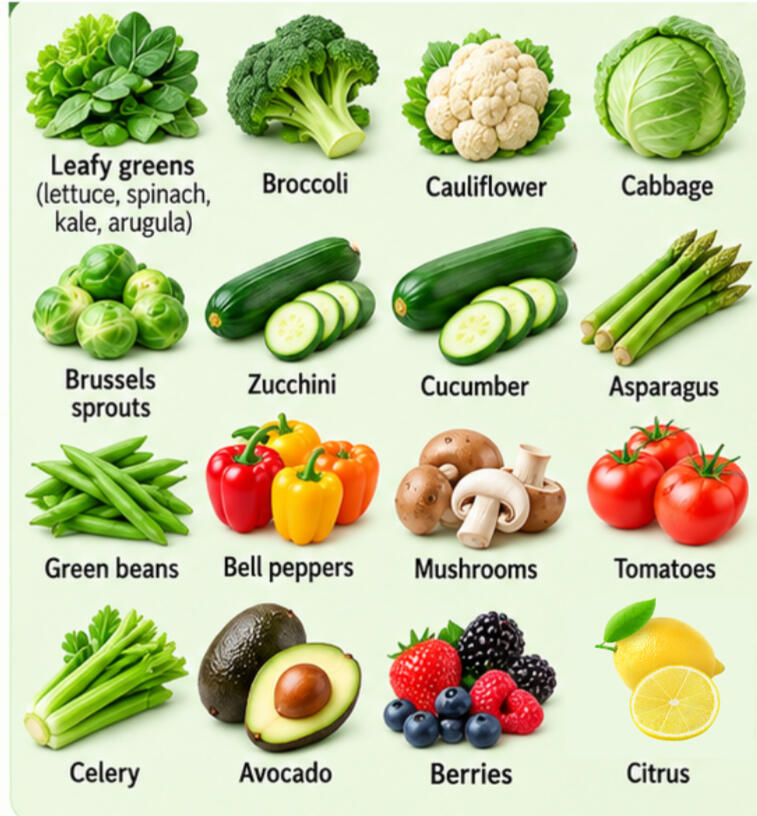
Low Glycemic Load Foods
Lowest Blood-sugar Impact
Leafy greens
Broccoli
Cauliflower
Cabbage
Brussels sprouts
Zucchini
Cucumber
Asparagus
Green beans
Bell peppers
Mushrooms
Tomatoes
Celery
Onions
Avocado
Berries
Citrus
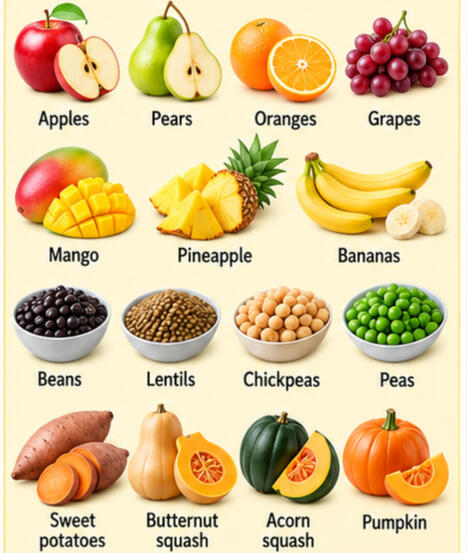
Moderate Glycemic Load Foods
Moderate blood-sugar impact
Apples
Pears
Oranges
Grapes
Mango
Pineapple
Bananas
Beans
Lentils
Chickpeas
Peas
Sweet potatoes
Butternut squash
Acorn squash
Pumpkin
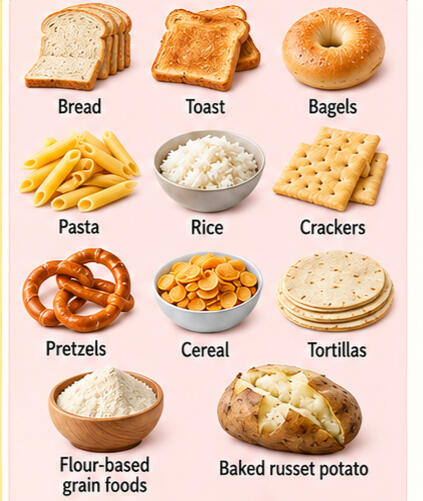
High Glycemic Load Foods
Highest blood-sugar impact
Bread
Toast
Bagels
Pasta
Rice
Crackers
Pretzels
Cereal
Tortillas
Flour-based grain foods
Starch-based foods
Baked russet potatoes
The Bigger Picture
Glycemic load is only one piece of a meal.
Eating carbohydrate-rich foods alongside fiber, protein and fat, choosing less-refined foods, paying attention to portions and moving after meals can all influence the blood-sugar response.
You don't necessarily need to eliminate higher-glycemic foods. Think of the chart as a tool for understanding how to build a more balanced meal.
How to use this guide
Rather than thinking of foods as simply “good” or “bad,” use this chart to understand which foods typically have a lower, moderate or higher glycemic impact. Portion size, preparation and what you eat alongside a carbohydrate can all affect your individual blood-sugar response.
Want Personalized Support?
Struggling with blood sugar, digestion, or balancing your hormones?
These issues are often connected.
For a personalized approach to your health, you can book a free introductory call with me.
The Mineral Aware Phytate Guide
How to lower your phytate load, support mineral absorption,
and build more mineral-aware meals.
Phytates, also known as phytic acid, is the natural storage form of phosphorus found in many grains, legumes, nuts and seeds. These foods can be incredibly nutritious, but phytates can bind certain minerals in the digestive tract, particularly iron and zinc and reduce how much your body absorbs from that meal.This becomes especially important when grains, beans, nuts and seeds make up a large portion of your diet. The same foods supplying protein, iron and zinc may also be supplying significant amounts of phytates.
In other words, a meal can look very mineral-rich on paper while the amount you actually absorb is somewhat lower.
Why It Matters
Potential Effects of Low Zinc and Iron Status
When phytates bind minerals like zinc and iron, your body may absorb less of them from that meal. Over time, this can contribute to low levels—especially if grains, legumes, nuts and seeds make up a large portion of the diet and are not properly prepared.
Both zinc and iron are essential for hundreds of functions in the body. Even mild deficiencies can affect how you feel day to day, while more significant deficiencies can contribute to more serious health concerns.Important: These lists are not diagnostic. Many of these symptoms can have multiple causes, and nutrient status is best evaluated in context.
Zinc
Associated Health Effects
Zinc supports immune function, wound healing, growth and development, reproduction, skin health, taste and smell, and many other processes throughout the body.
.
Common Early or Mild Signs of Low Zinc Status
•Weaker immune response, frequent illness
•Slow wound healing
•Increased susceptibility to infections
•Changes in taste or smell
•Acne or other skin concerns
•Dry skin
•Hair thinning or other hair changes
•Brittle nails
•Fatigue or low energy
•Poor appetite
•Digestive symptoms such as diarrhea
•Reproductive or hormonal changes
•Mood changes such as irritability, low mood
•Difficulty with concentration or memory
.
More Severe or Long-Term Zinc Deficiency
More significant or prolonged zinc deficiency may contribute to:
•Growth and developmental delays, particularly in children
•Reproductive problems
•Impaired immune function
•Significant skin disorders such as dermatitis
•Vision-related problems, including impaired dark adaptation
•Poor pregnancy outcomes
Iron
Associated Health Effects
Iron is essential for making hemoglobin, the protein in red blood cells that carries oxygen throughout the body. It also contributes to energy metabolism, brain function, immune health and many other processes.
.
Common Early or Mild Signs of Low Iron Status
•Fatigue or low energy
•Reduced exercise tolerance
•Shortness of breath, particularly with exertion
•Pale skin
•Headaches
•Dizziness or lightheadedness
•Cold hands and feet
•Poor concentration or brain fog
•Irritability or low mood
•Brittle nails
•Hair thinning or increased shedding
•Restless legsIron depletion can develop gradually, which means symptoms may sometimes appear before full iron-deficiency anemia develops.
.
More Severe or Long-Term Iron Deficiency
More significant iron deficiency may eventually lead to iron-deficiency anemia, in which hemoglobin and/or healthy red-blood-cell production becomes inadequate.
Possible effects can include:
•Significant fatigue and weakness
•More pronounced shortness of breath
•Rapid heartbeat or heart palpitations
•Impaired cognitive function
•Reduced physical performance
•Pregnancy complications, including increased risk of preterm birth and low birth weight
•Impaired cognitive development in children
The goal is NOT a phytate-free diet.
Whole grains, beans, nuts and seeds offer fiber, minerals and beneficial plant compounds.
The goal is simply to:*
•Be aware of where most of your phytate is coming from.
•Prepare higher-phytate foods in ways that can reduce it.
•Avoid stacking several major phytate sources into every meal.
•Build meals that support mineral absorption.
•The goal is mineral awareness, not food fear.
Where Is Phytate Found?
A helpful rule of thumb:
Fruits and most vegetables are naturally very low in phytate.
Animal foods contain essentially no phytate.
Phytate is concentrated primarily in the reproductive and storage portions of plants:
Grains + legumes + nuts + seeds
Low-to-No Phytate Foods
Fresh Fruit
Berries, papaya, citrus, kiwi, pineapple, mango, melon, peaches, plums,
cherries, grapes, apples, pears and bananas.
Leafy Greens
Romaine, arugula, kale, cabbage, bok choy, collards, spinach, mixed greens
and fresh herbs.
Other Vegetables
Zucchini, cucumber, celery, mushrooms, asparagus, broccoli, cauliflower,
green beans, tomatoes, peppers, eggplant, radishes, onions and garlic.
Root + Tuber Vegetables
Potatoes, sweet potatoes, carrots, beets, turnips, parsnips and rutabaga.
Whole Food Fats
Avocado and olives are especially useful when you want to add fat to a
meal without automatically adding another nut or seed source.
Phytate Free Vegetarian Foods
Eggs, milk, Greek yogurt or skyr, kefir, cottage cheese and cheese.
Other Low or Phytate Free Foods
Fish, seafood, meat and poultry contain essentially no phytate. Fungal
proteins such as mycoprotein are also naturally very low in phytate.

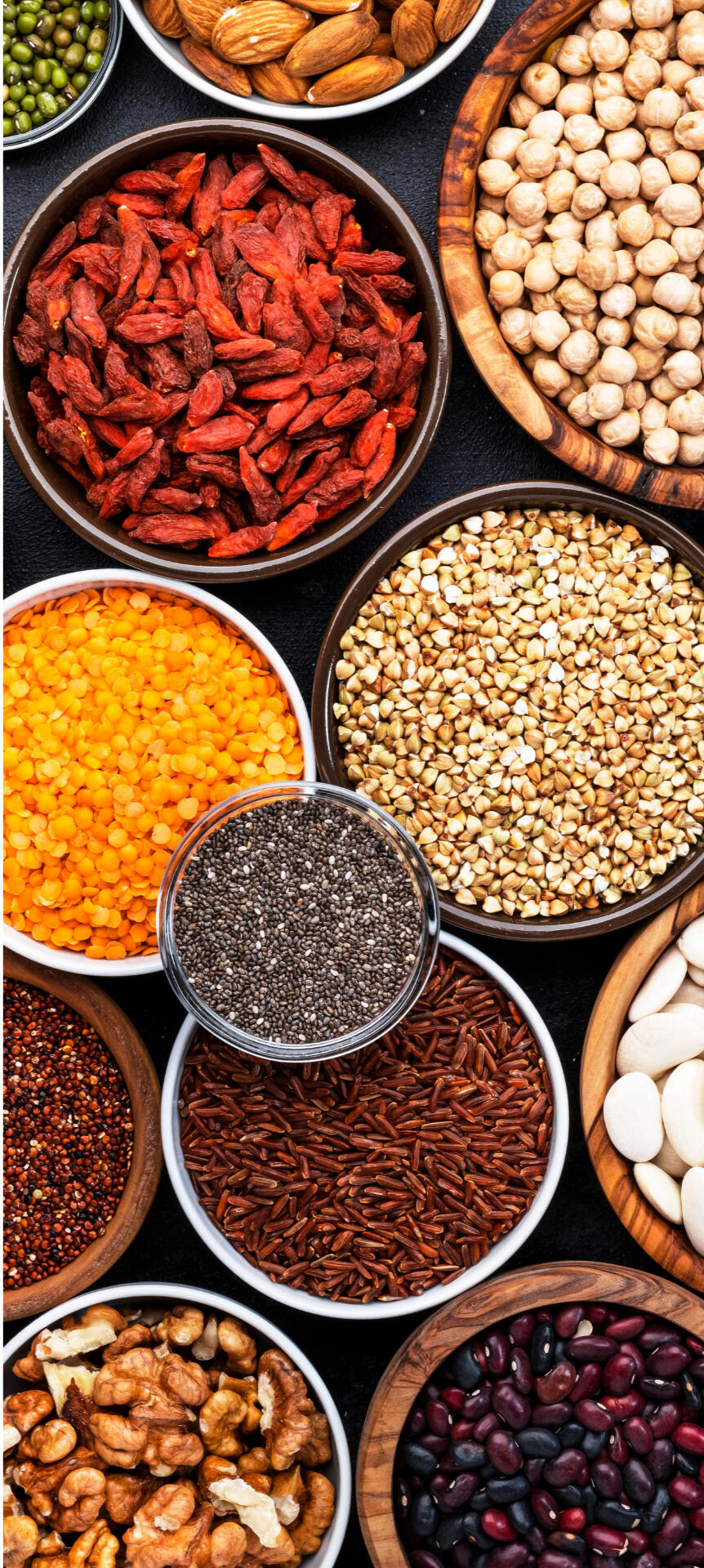
Foods Commonly
Highest in Phytate
Phytate levels vary considerably depending on the variety
of food and how it has been processed or prepared, so
think of these as commonly higher-phytate categories rather
than a strict ranking.
Bran + Intact Whole Grain
Wheat bran, whole wheat, brown rice, oats, corn, rye, barley and other
intact grains.
Legumes
Soybeans and edamame, kidney beans, black beans, chickpeas, lentils, peas
and other pulses.
Nuts + Seeds
Almonds, peanuts, cashews, walnuts, Brazil nuts and nut butters.
High-Phytate Combinations
This is the one people often overlook.One meal might contain:
Whole grain + beans + tahini + pumpkin seeds + another seed topping.Each ingredient can be nutritious on its own. But together, you've
stacked several of the most concentrated dietary sources of phytate
into one meal.
Remember: Low phytate does not automatically mean “healthier.” This guide is about mineral bioavailability and balance—not labeling foods as good or bad.
How to Reduce Phytate
You don't necessarily need to remove higher-phytate foods.
Traditional preparation methods can help.
Ferment
Fermentation is one of the most useful strategies. Fermentation can activate phytase enzymes from the food itself or microorganisms, helping break down phytic acid.
Examples:
•Tempeh
• traditionally fermented legumes
• long-fermented sourdough
Sprout of Germinate
Germination activates phytase enzymes already present within the seed.
Sprouting foods such as lentils, mung beans, chickpeas, soybeans and grains can reduce their phytate content.
Soak + Discard The Water
Soaking can reduce phytate in some foods through both leaching and activation of naturally occurring phytase.When appropriate:
Soak → drain → rinse → cook in fresh water
The effect varies considerably depending on the food.With nuts + seeds:
Keep portions reasonable. Soaking may help in some cases, but don't assume an “activated” nut or seed has suddenly become phytate-free.
Cook
Cooking is important for food safety and digestibility, but cooking alone is generally less effective at reducing phytates than germination or fermentation.
When practical, combine methods.
Mill or Remove the Bran
Much of the phytate in cereal grains is concentrated in the bran and germ.
Removing those layers lowers phytate—but there is a tradeoff because refining also removes some fiber and naturally occurring micronutrients.
One More Tool: Vitamin C
Vitamin C doesn't remove phytate.
Instead, it can help improve the absorption of non-heme iron, the form of iron found in plant foods.
Try adding vitamin-C-rich foods to plant-iron meals:
Lemon • lime • citrus • kiwi • berries • papaya • peppers • tomatoes
Something as simple as squeezing fresh lemon or lime over a meal can help.

Protein Without a Huge Phytate Load
You do not have to choose between getting enough protein and supporting mineral absorption. The trick is to rotate your proteins and, when possible, use proteins with little or no phytate—or preparation methods that reduce the phytate in legumes and soy.
Phytate Free Foods
Fish, poultry, beef + pork
Complete proteins that don't
add phytate to the meal.Eggs
A phytate-free vegetarian
protein source.Greek yogurt, skyr + cottage cheese
High-protein vegetarian
options with no phytate.Kefir, milk + cheese
Phytate-free, although
protein content varies.

Very Low Phytate
Mycoprotein + fungal proteins
Fungi are not grains, legumes, nuts or seeds, so phytate is naturally very low.Check finished products individually because other ingredients vary.

Reduced Phytate
Tempeh
Fermentation reduces soybean phytate. It isn't phytate-free, but it can be a useful alternative to relying exclusively on whole soybeans.Sprouted tofu + sprouted soy products
Germinating soy before processing can reduce phytate compared with unsprouted soy.Sprouted + cooked legumes
They still contain phytate, but germination can reduce the amount while preserving a whole-food protein source.

Variable Phytate
Conventional tofu
Processing can reduce phytate, but the amount varies.Pea + soy protein isolates
Processing sometimes lowers phytate substantially, but manufacturing methods differ, so not every isolate should automatically be considered low-phytate.

A Simple Mineral-Aware Meal Formula
1. Choose one main protein.
Example: eggs, fish or seafood, poultry or beef, dairy, tempeh, sprouted tofu, prepared legumes, mycoprotein, a quality protein isolate

2. Surround it with
low-phytate produce.
Leafy greens, zucchini, mushrooms, tomatoes, peppers, broccoli, cabbage, cucumber and other vegetables are easy additions.

3. Add vitamin C when the
meal contains plant iron.
A squeeze of fresh lemon or lime is one of the simplest options.

4. Add fat without automatically
adding more phytate.
Avocado, olives or olive oil can provide fat without adding another nut or seed source.

5. Don't stack every high-phytate
food into the same meal.
If your protein is already coming from beans or another high-phytate food, you don't necessarily need to add a whole grain, tahini, nuts and three different seeds on top of it.

The “Healthy Bowl” Trap
Brown rice + black beans + tahini + pumpkin seeds + sunflower seeds. Every ingredient has nutritional value.
But the most of the contributing ingredients are major phytate sources.
If iron or zinc absorption is something you're trying to support, you don't have to abandon these foods.
Instead stop making every high-phytate ingredient show up at the same time or equate to the majority of the meal.
The Bottom Line
The goal isn't to fear beans, whole grains, nuts or seeds.
It's to recognize that simply adding more and more nutrient-dense plant foods to a meal doesn't necessarily mean you'll absorb more of every mineral they contain.
Rotate your protein sources. Use traditional preparation methods for higher-phytate foods when practical. Pair plant iron with vitamin C. And avoid stacking every major phytate source into every meal.
You can keep the benefits of plant foods while giving iron and zinc a better opportunity to be absorbed. PhytateGuidePlantBasedProte…
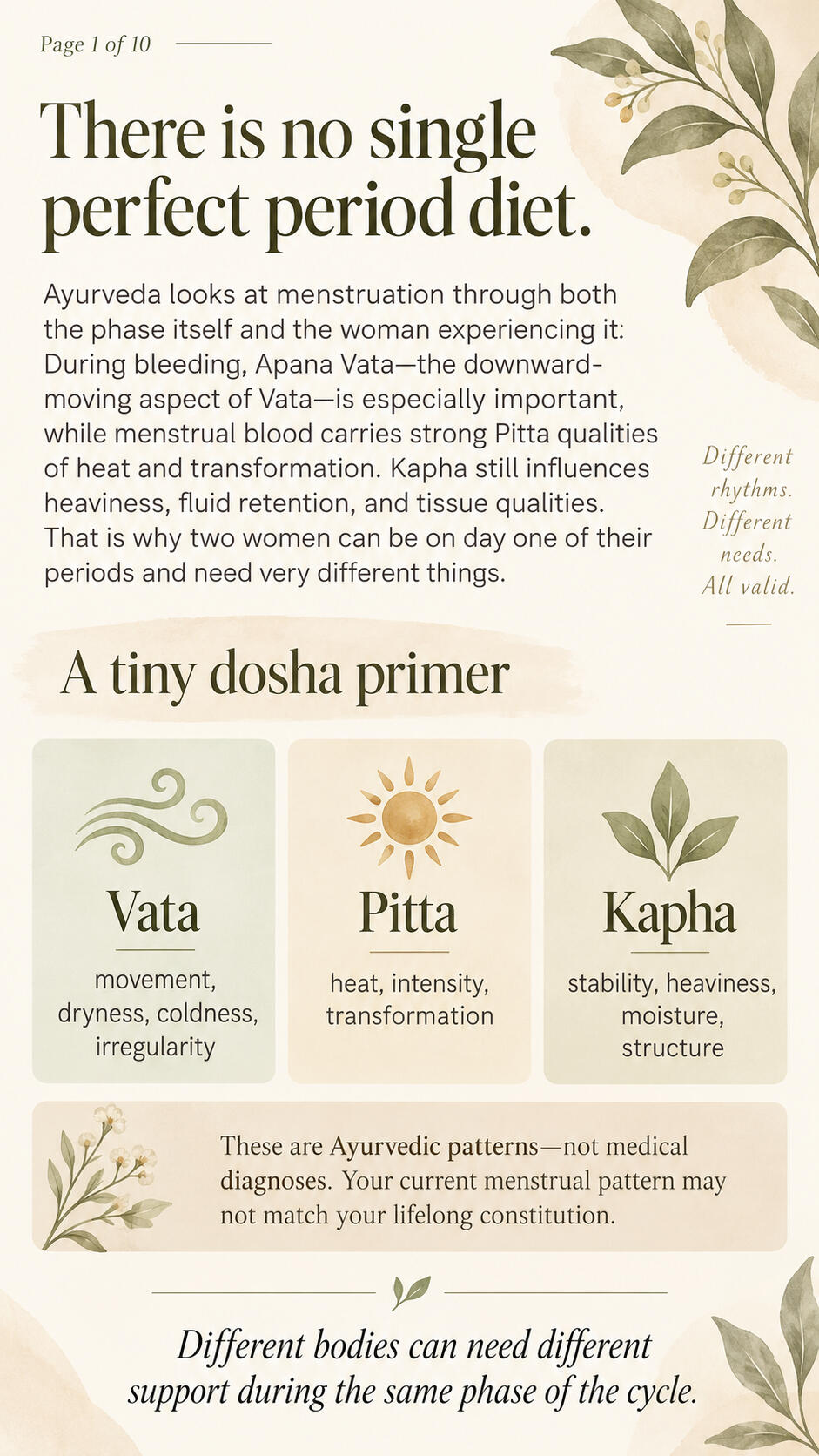
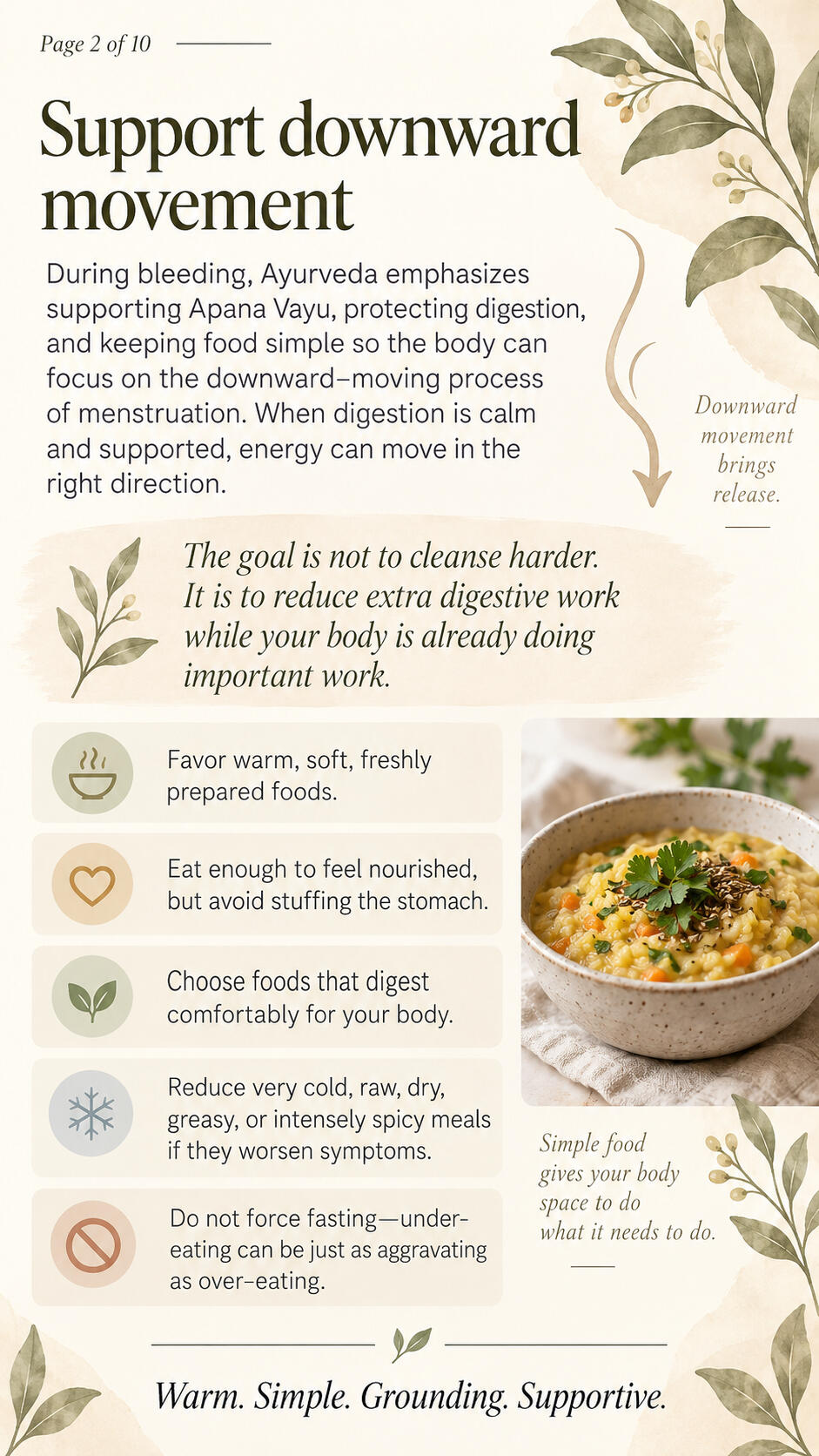
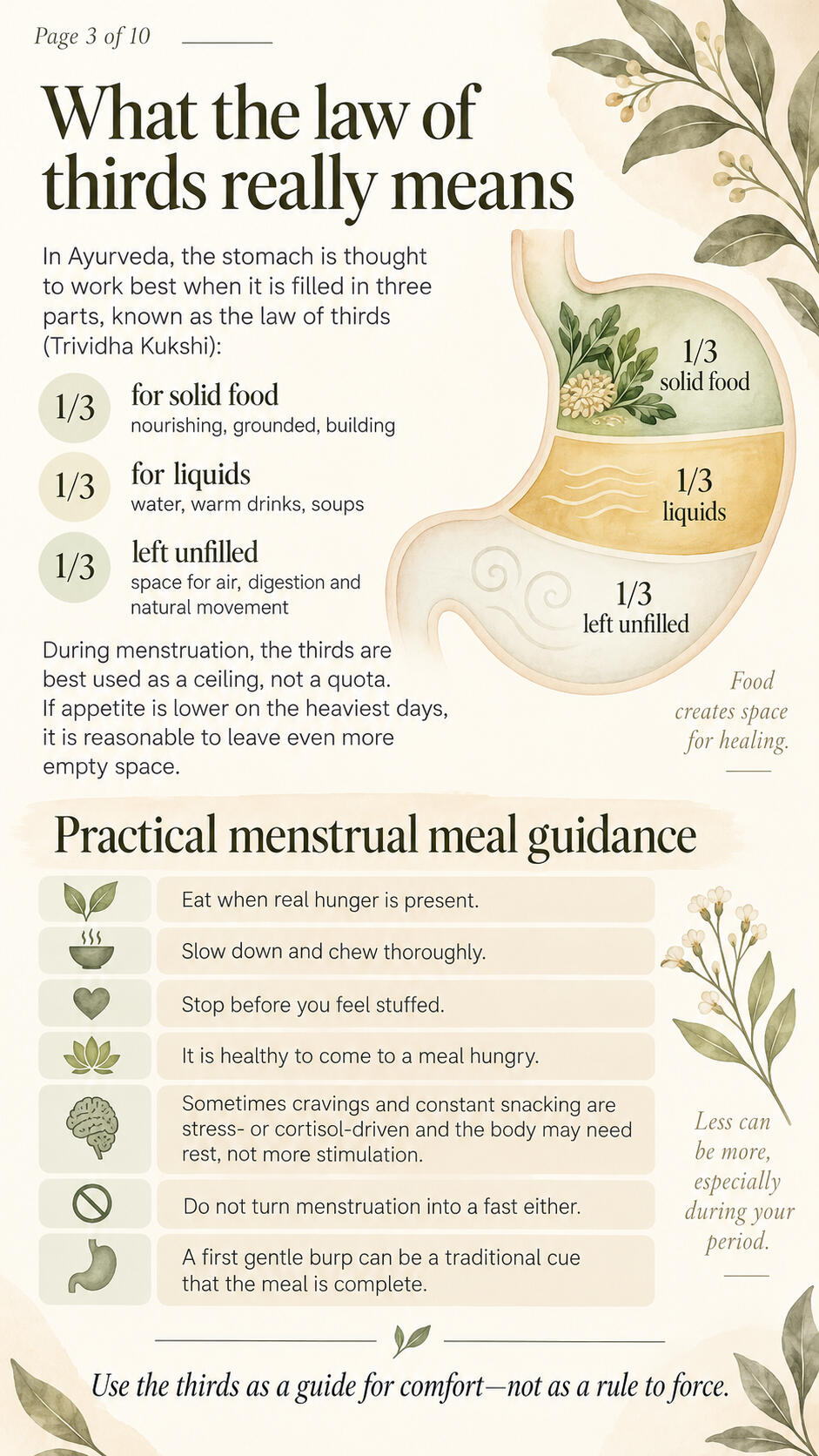
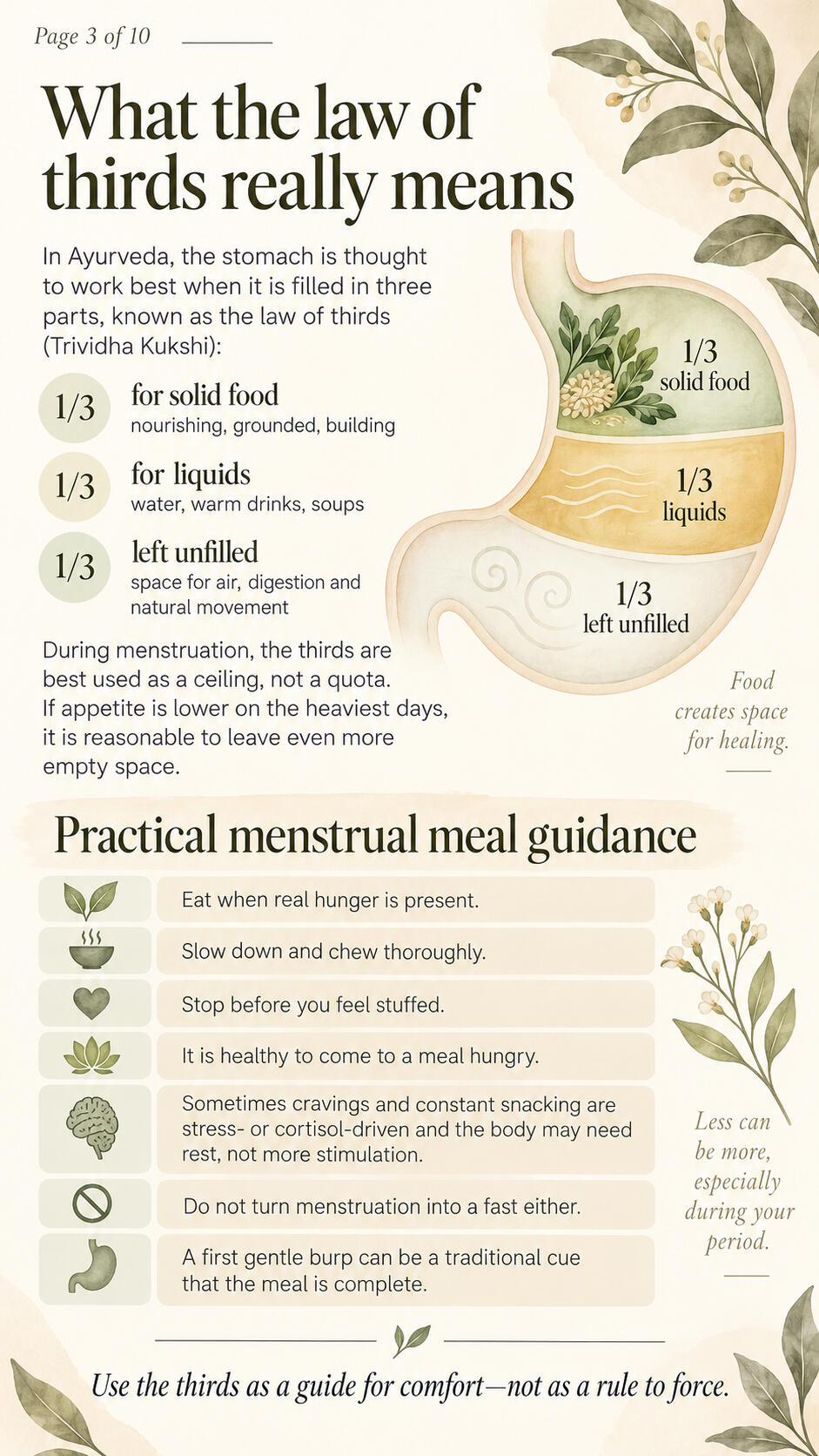
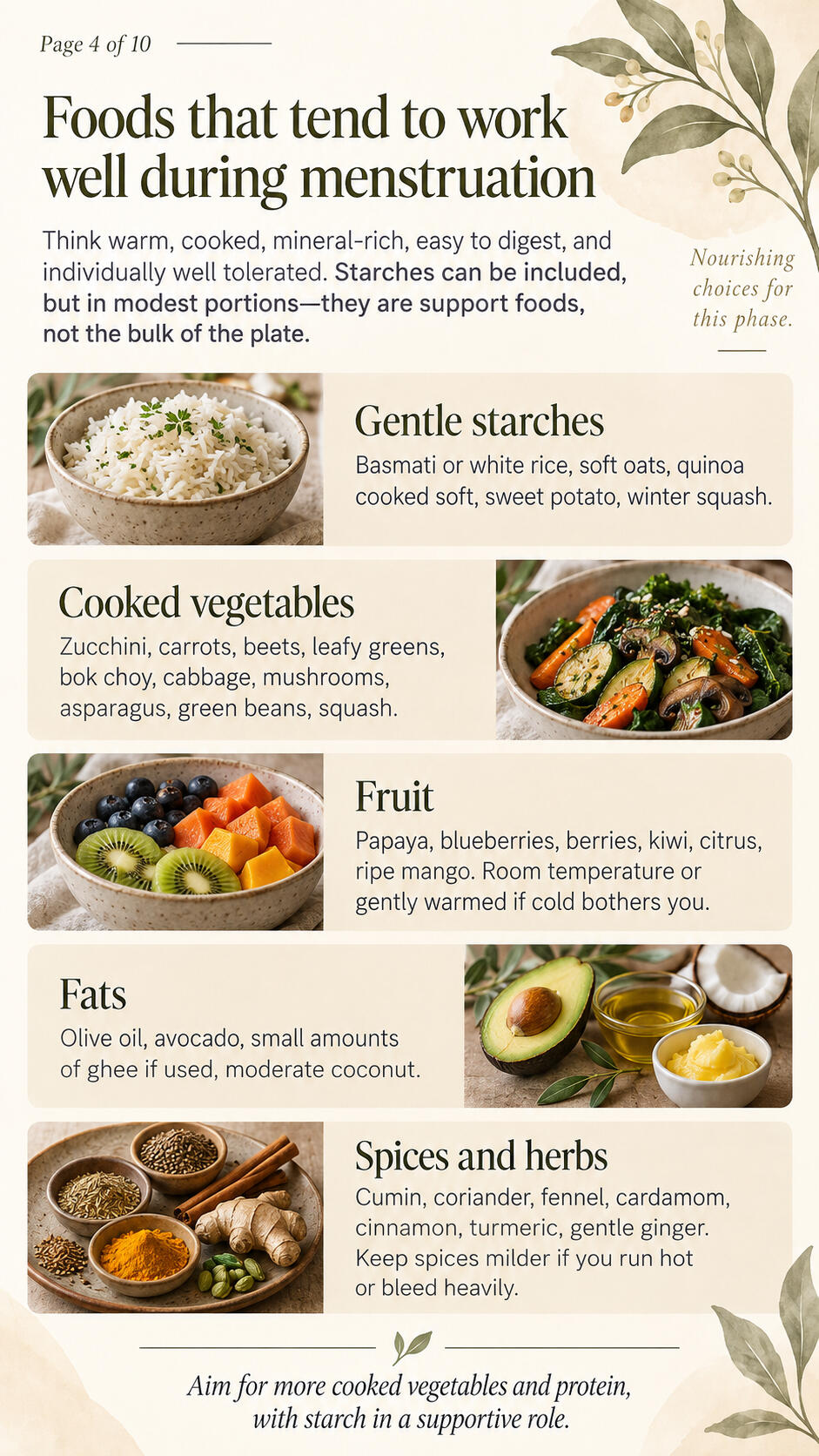
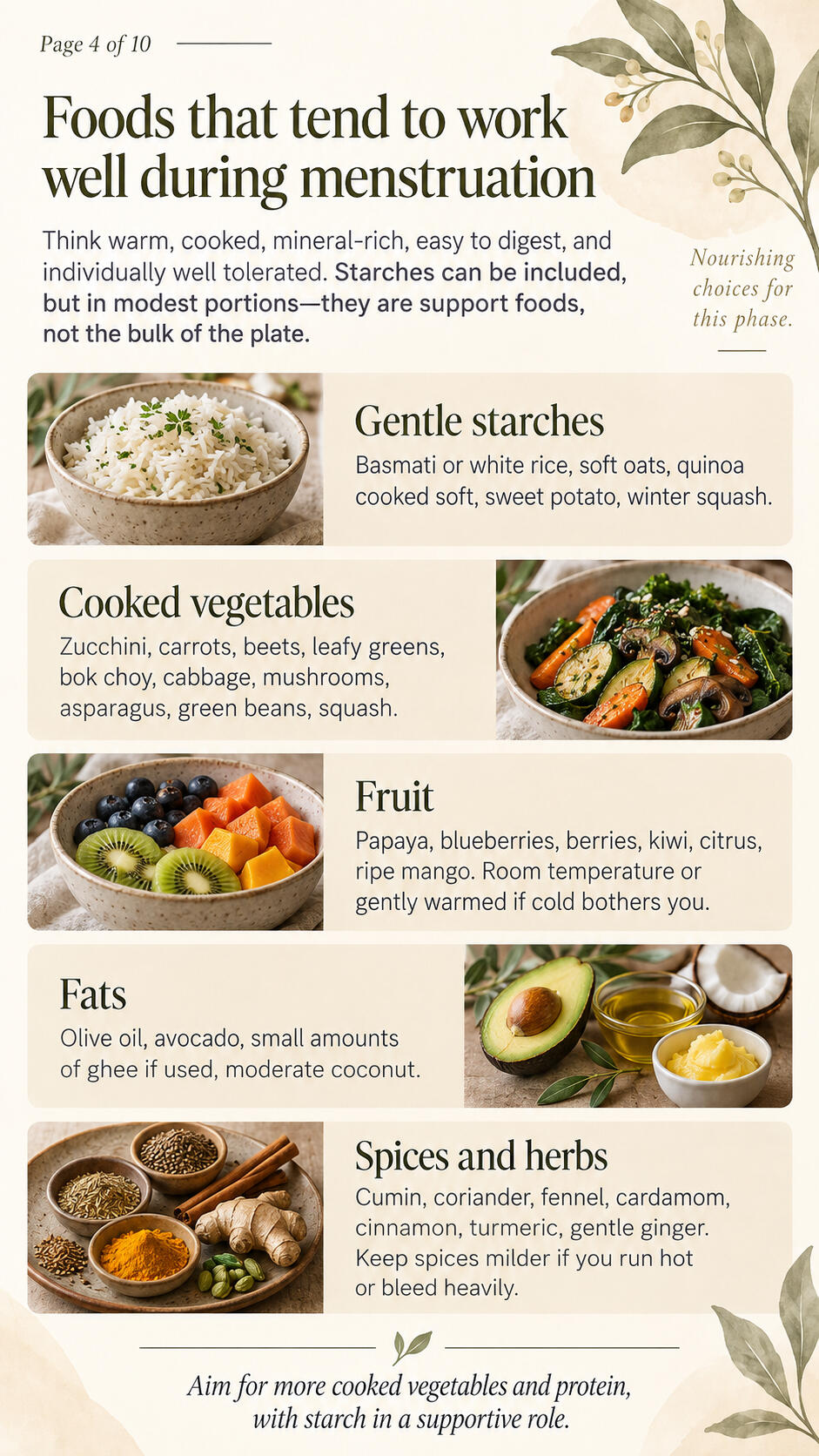
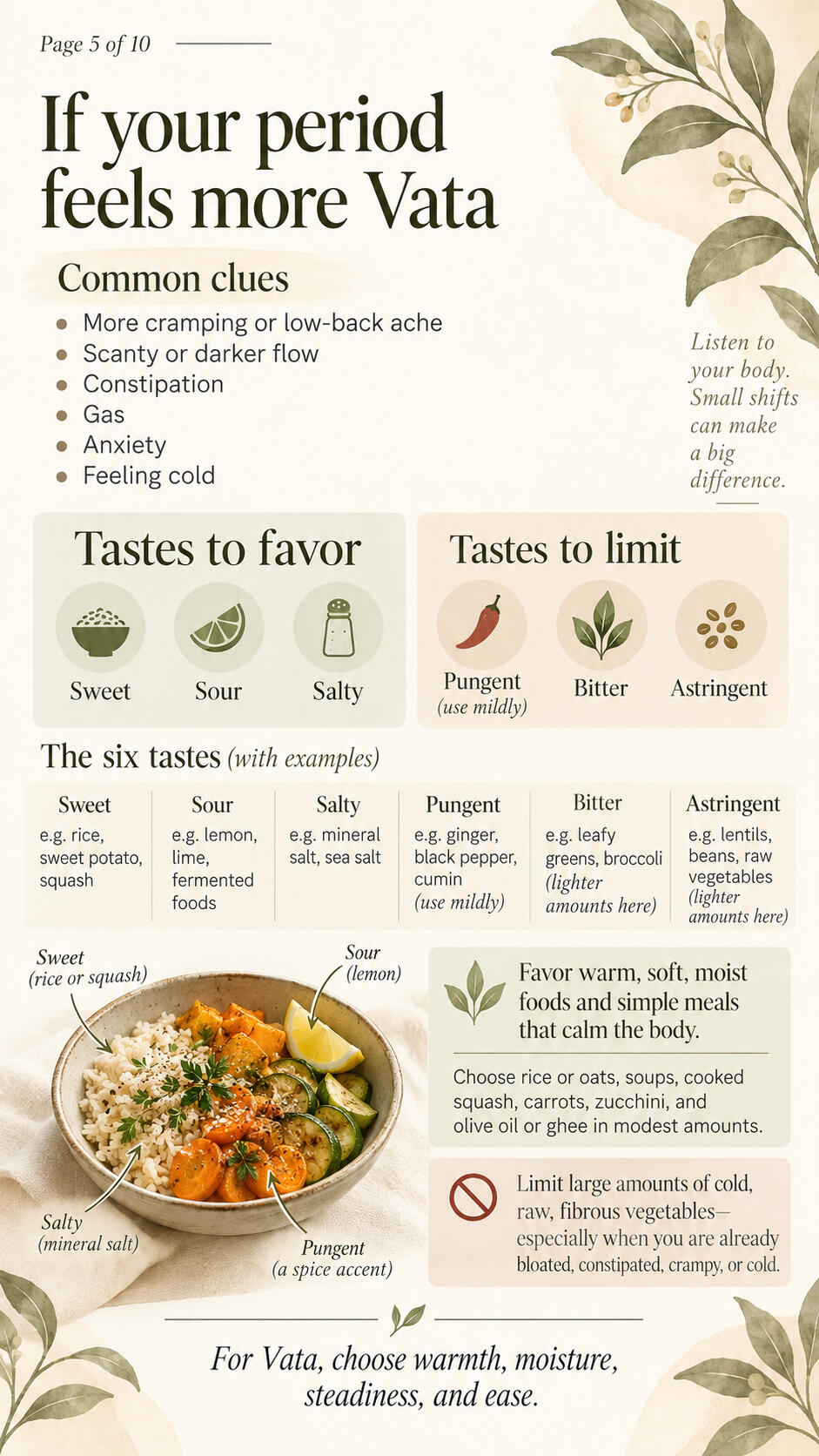
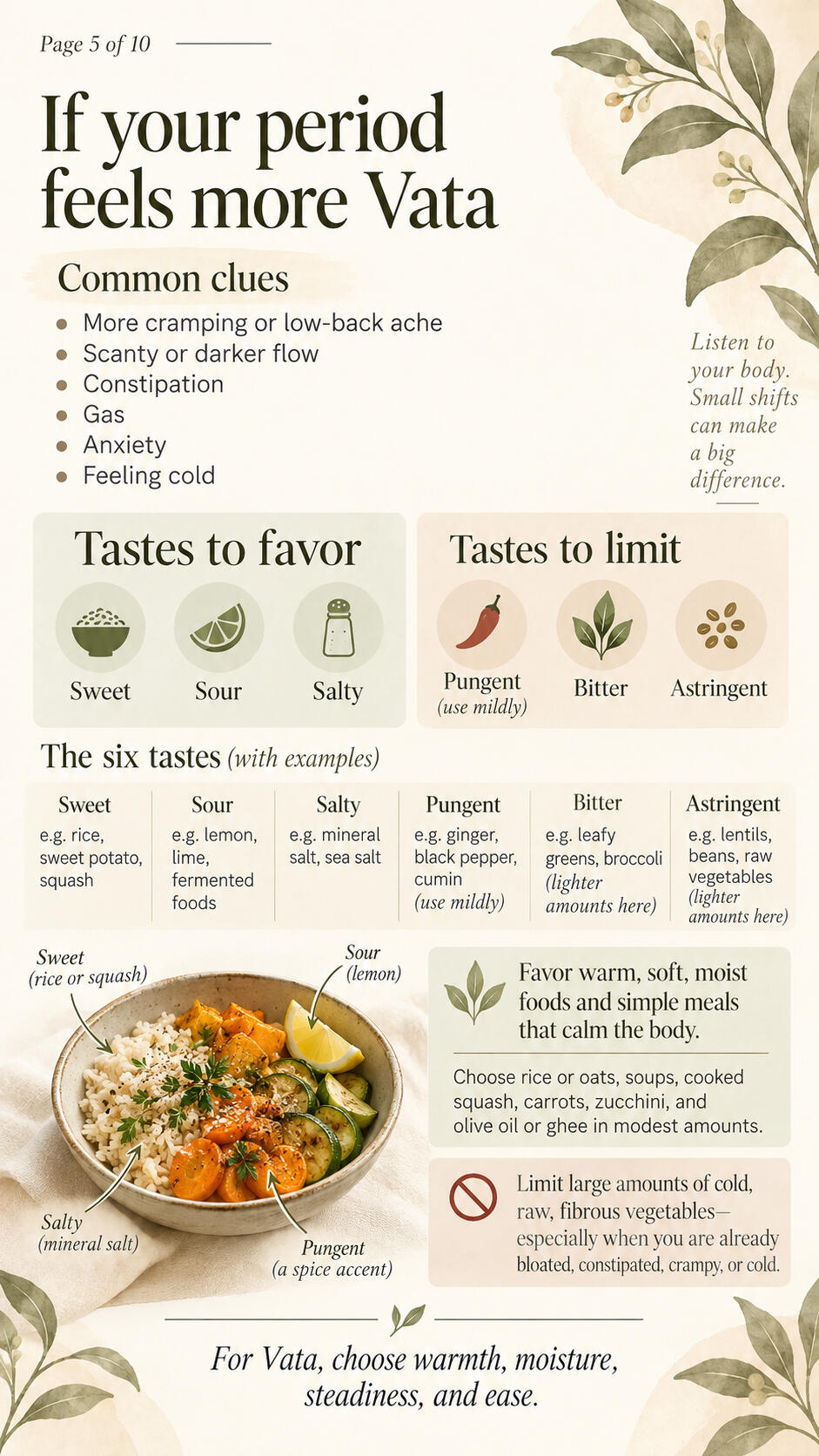
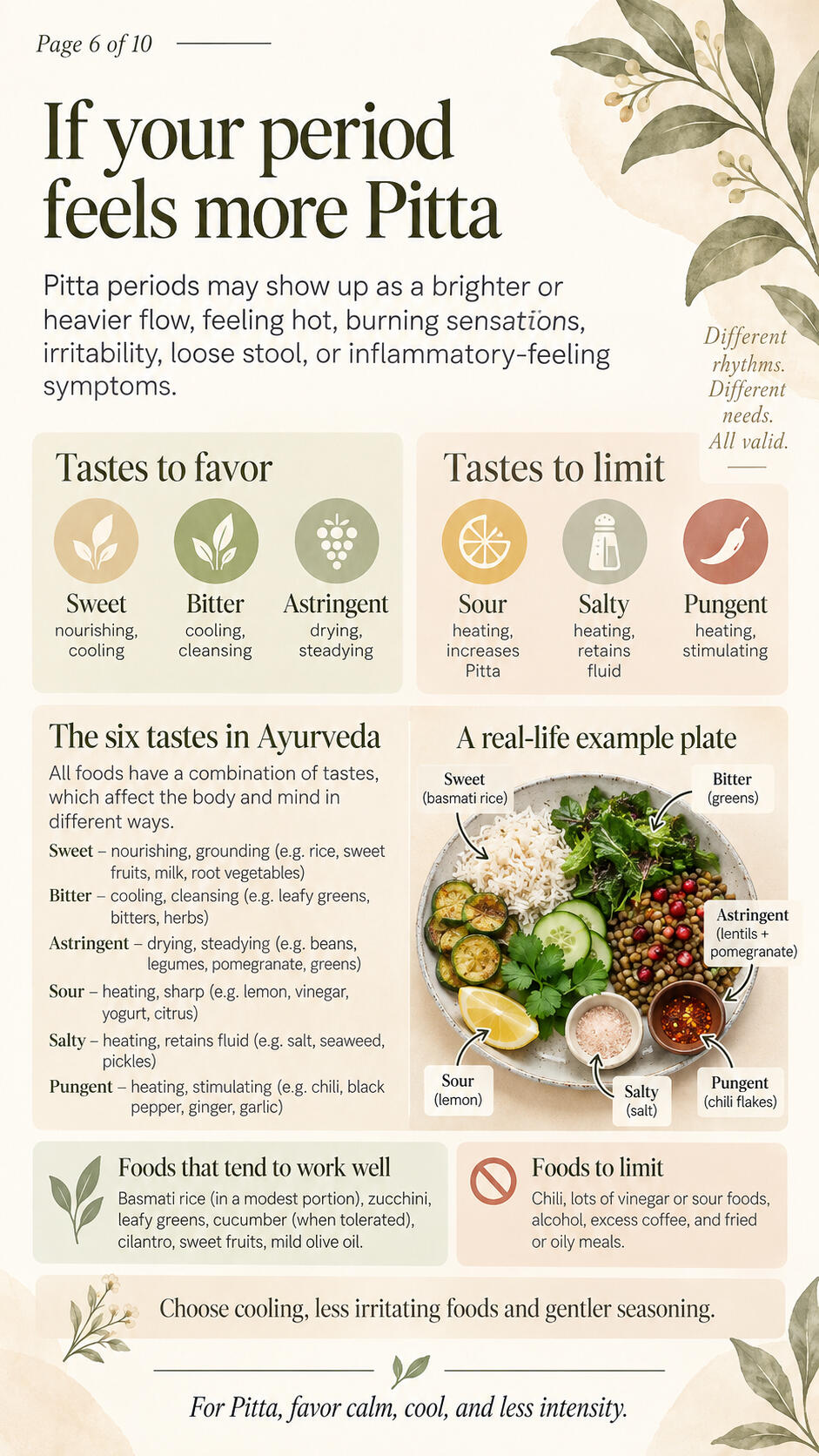
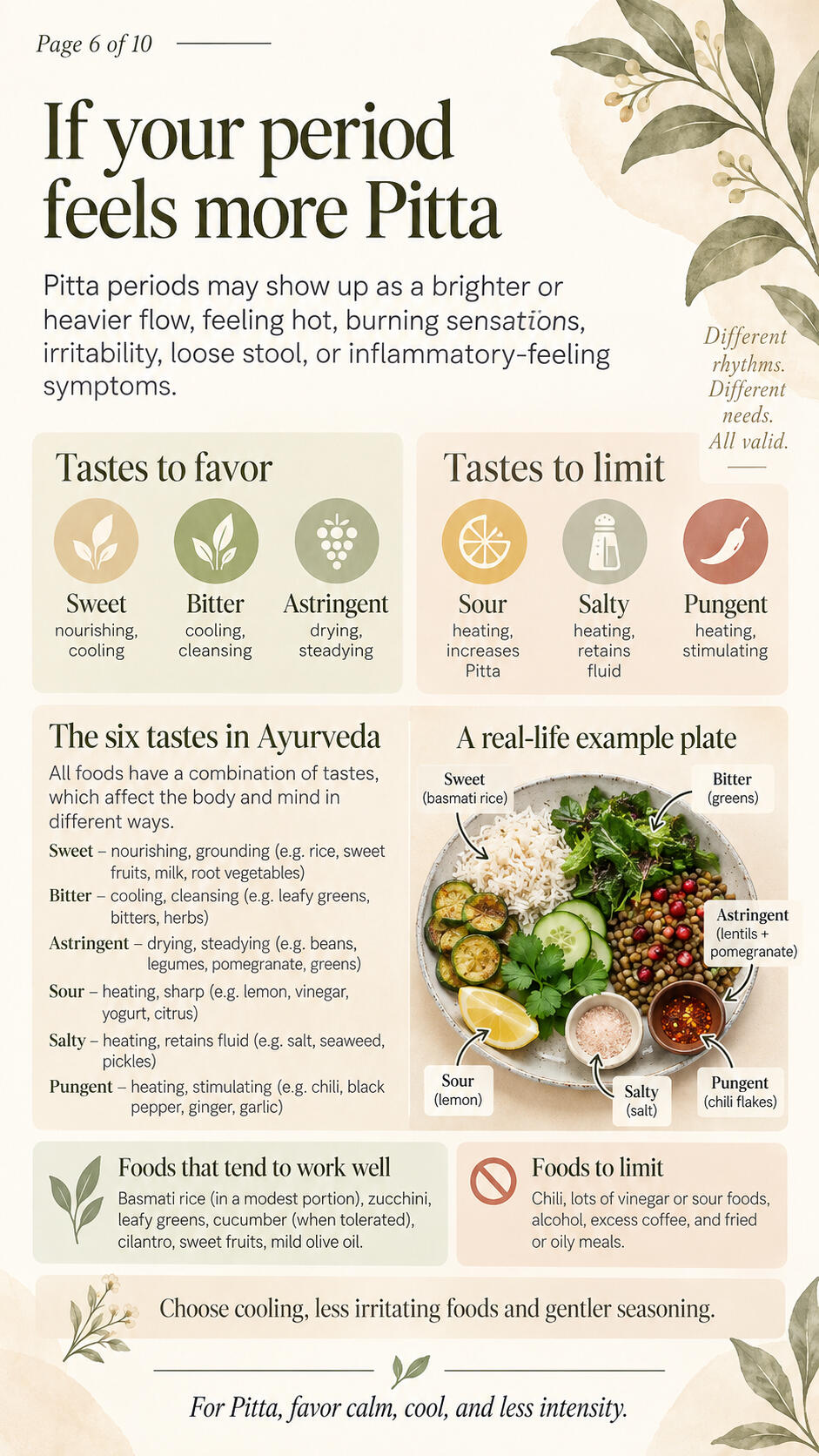
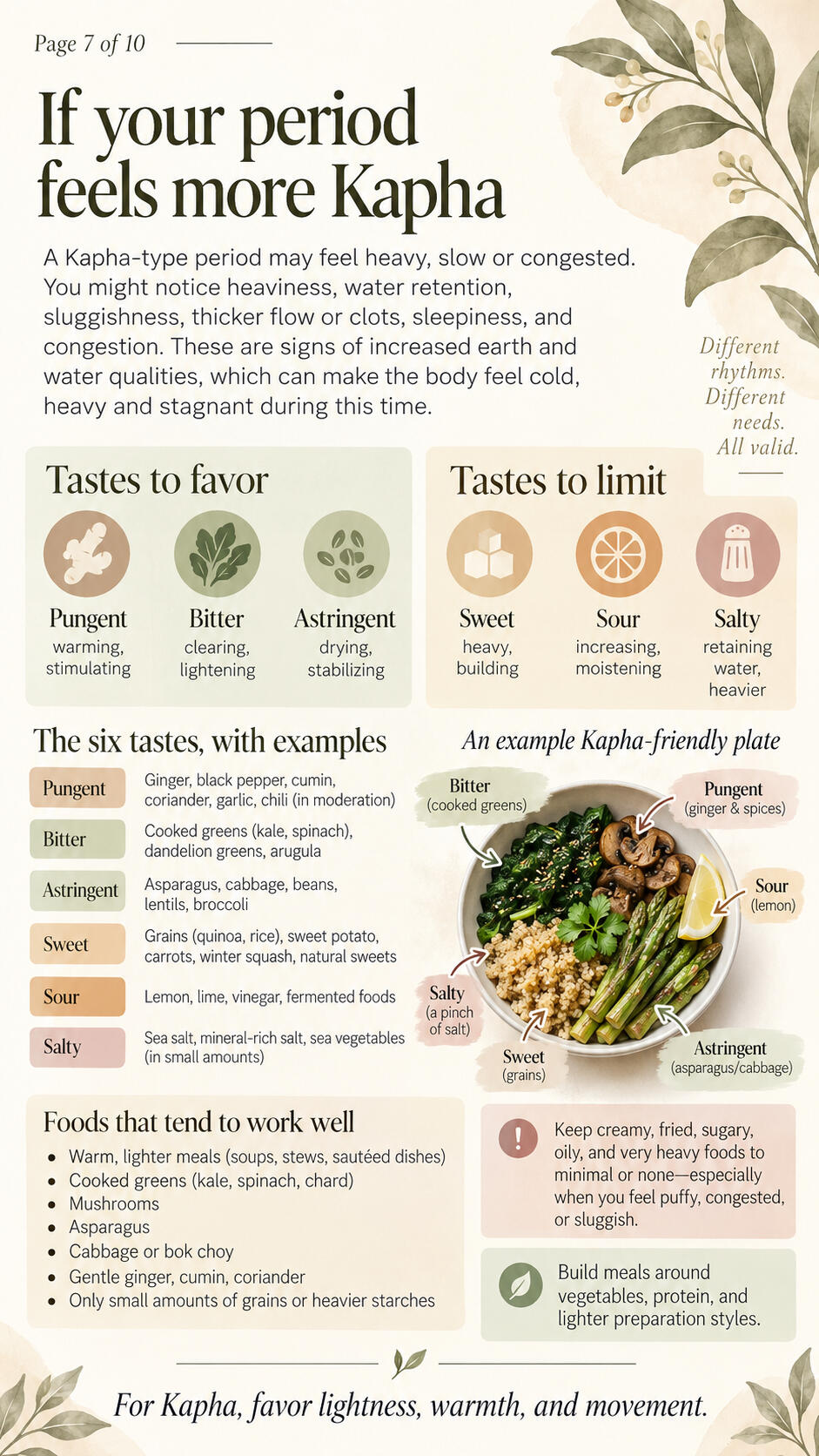
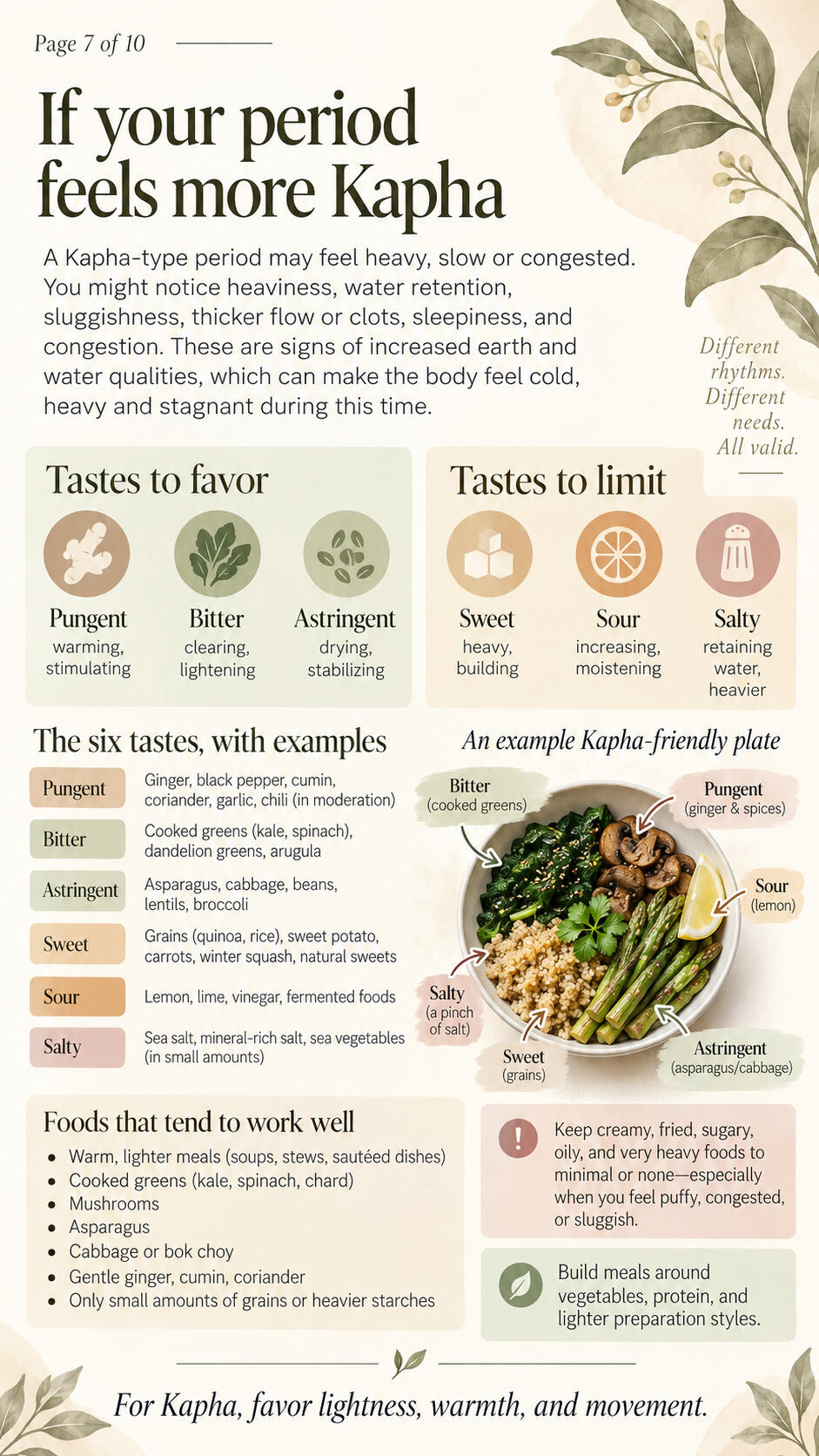
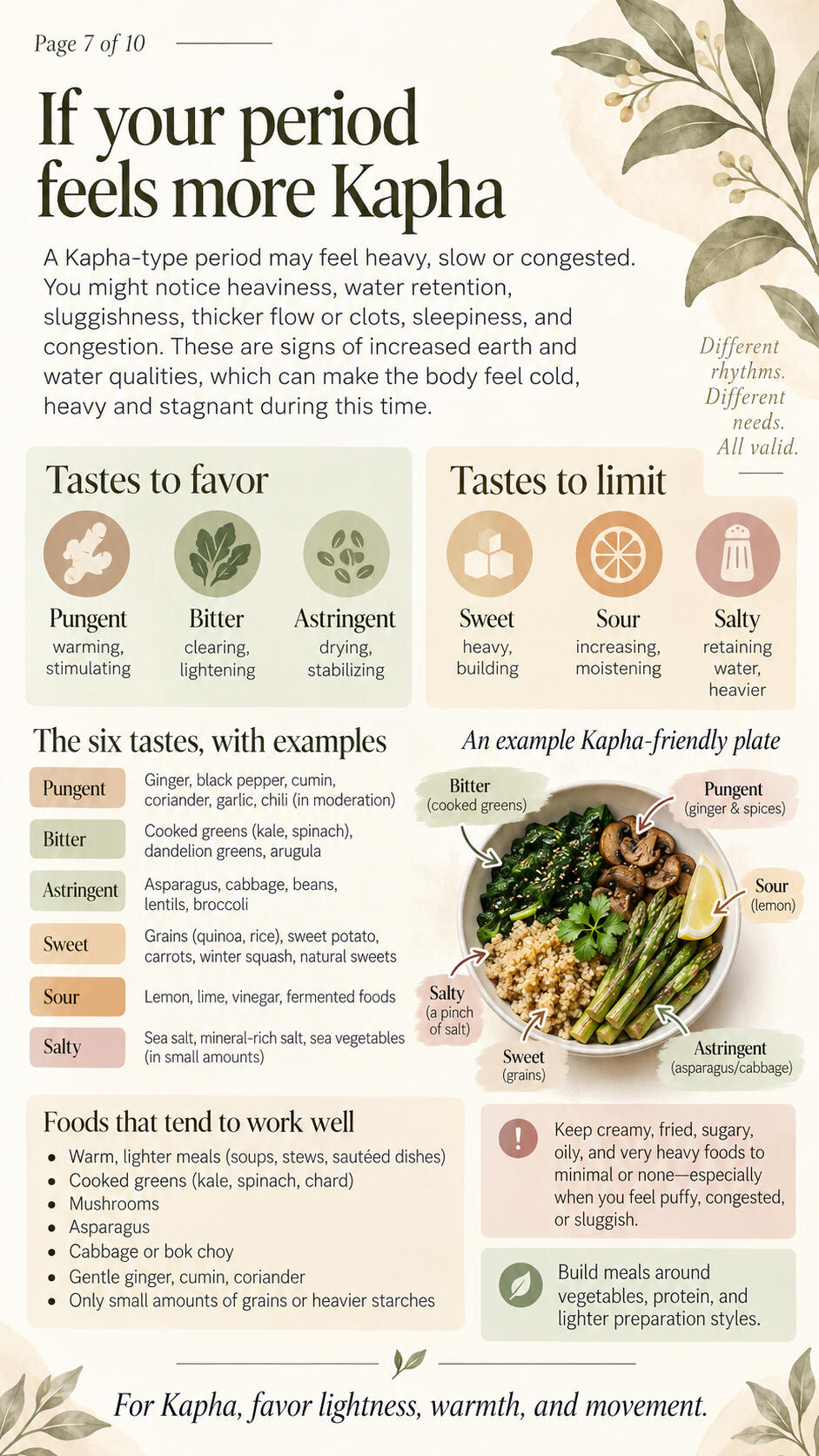
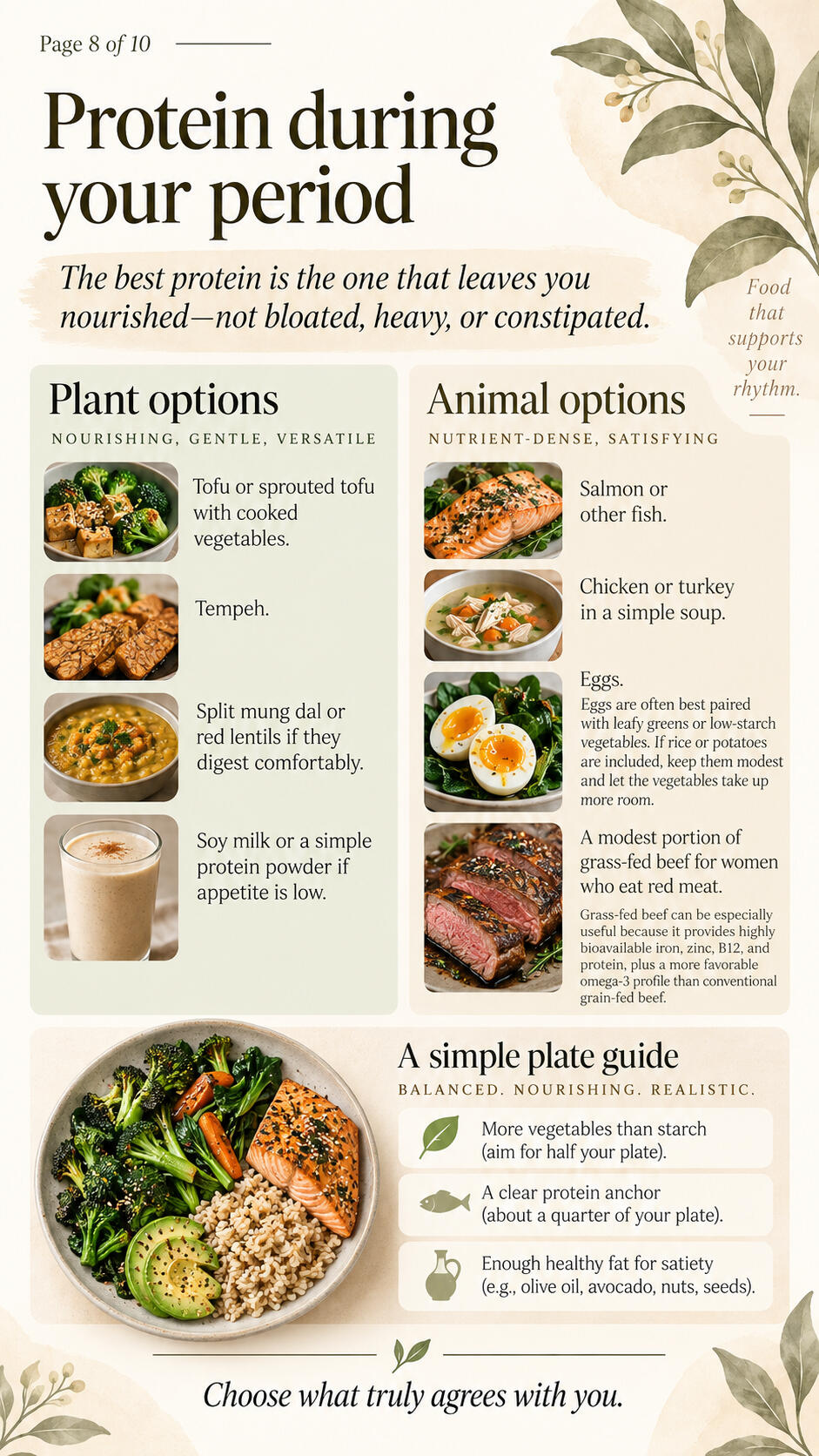
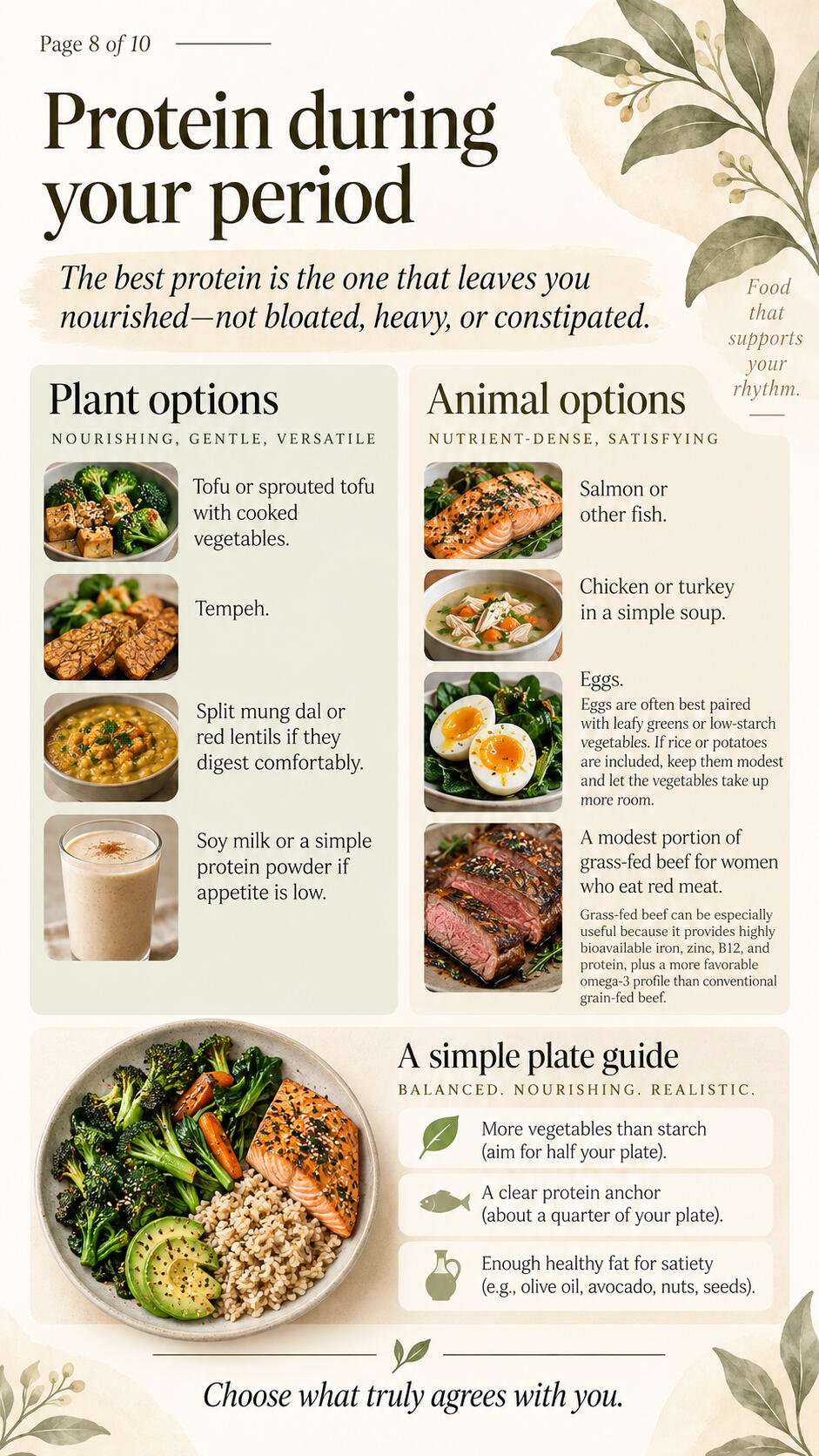
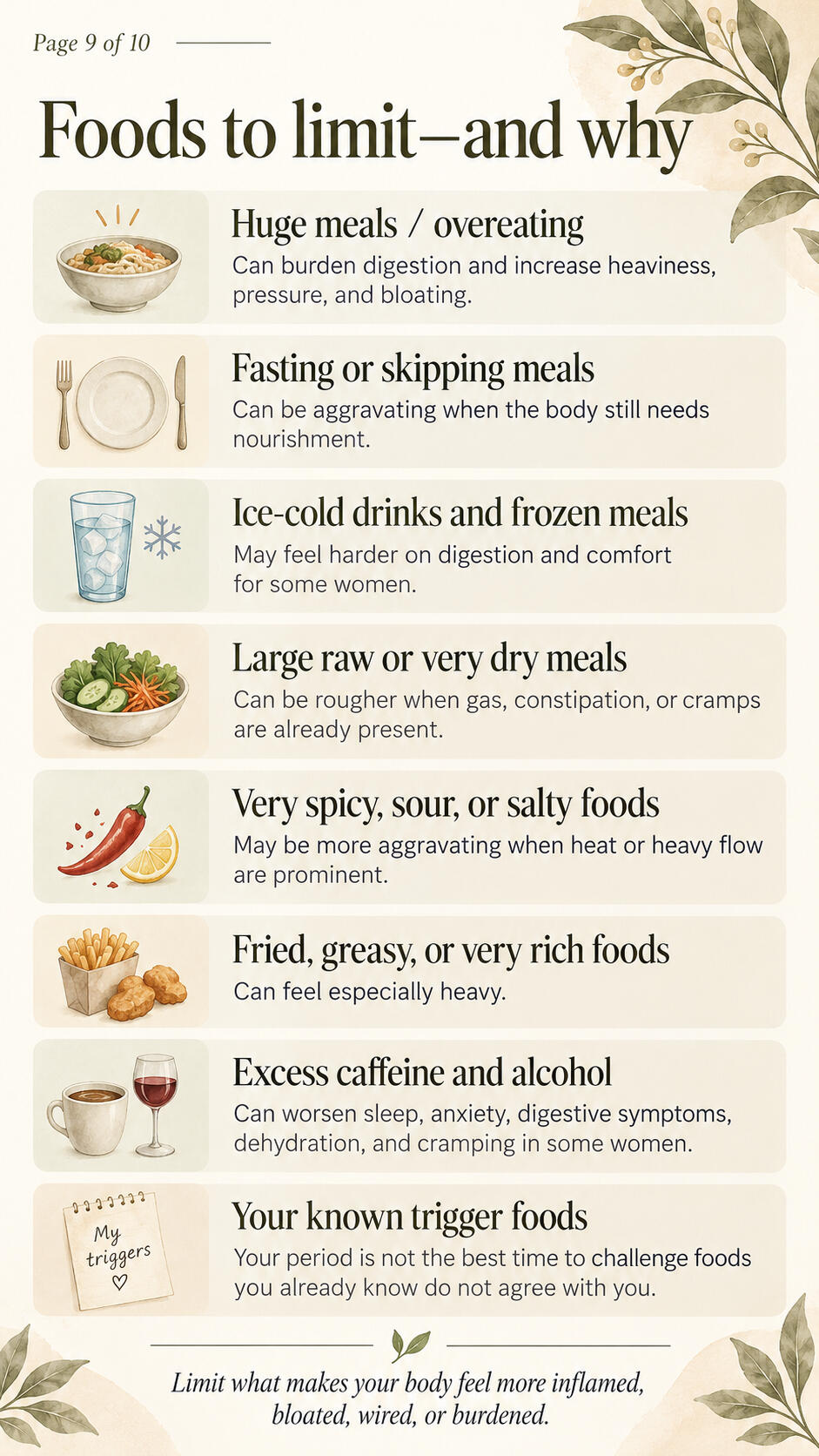
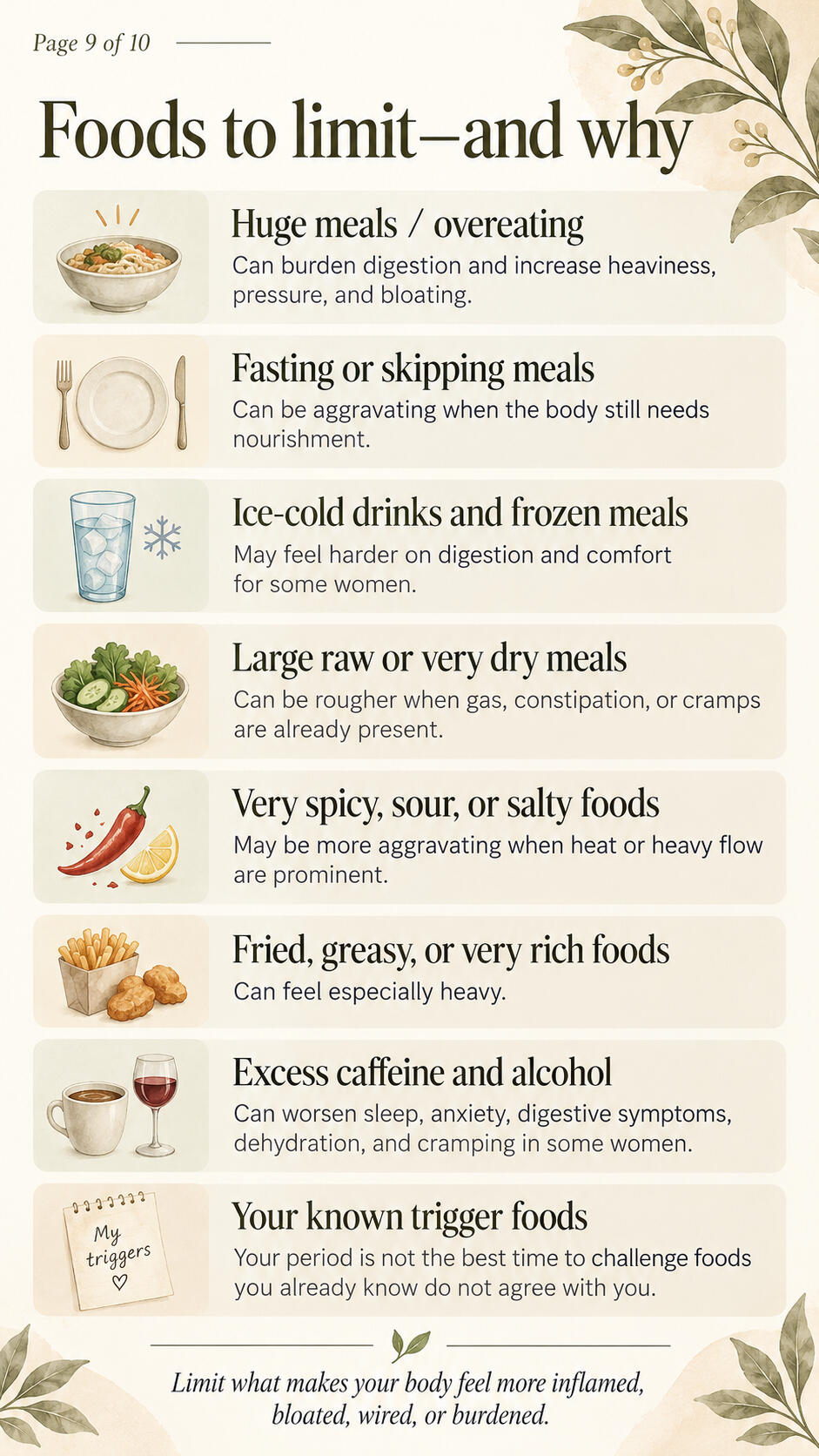
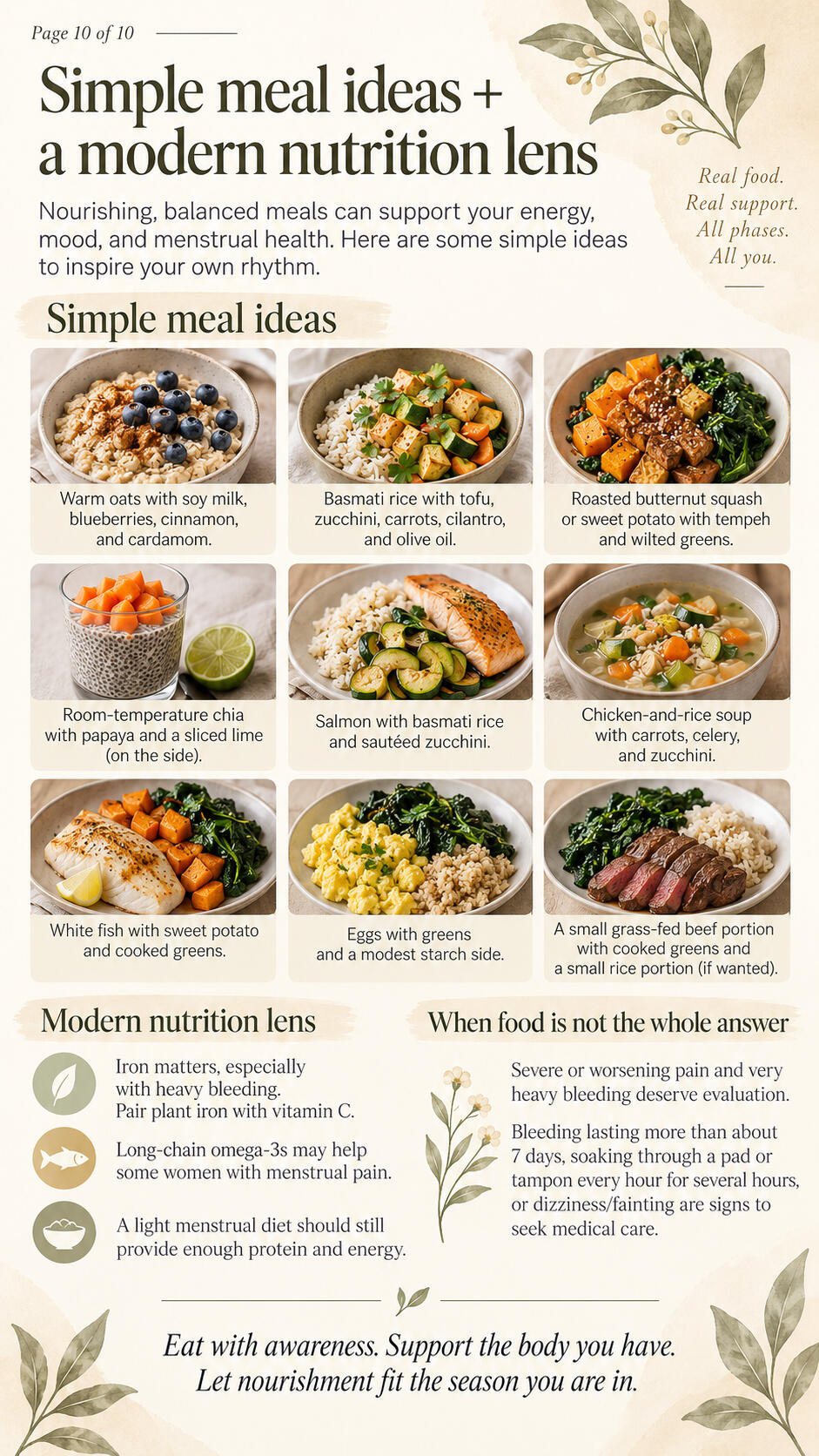
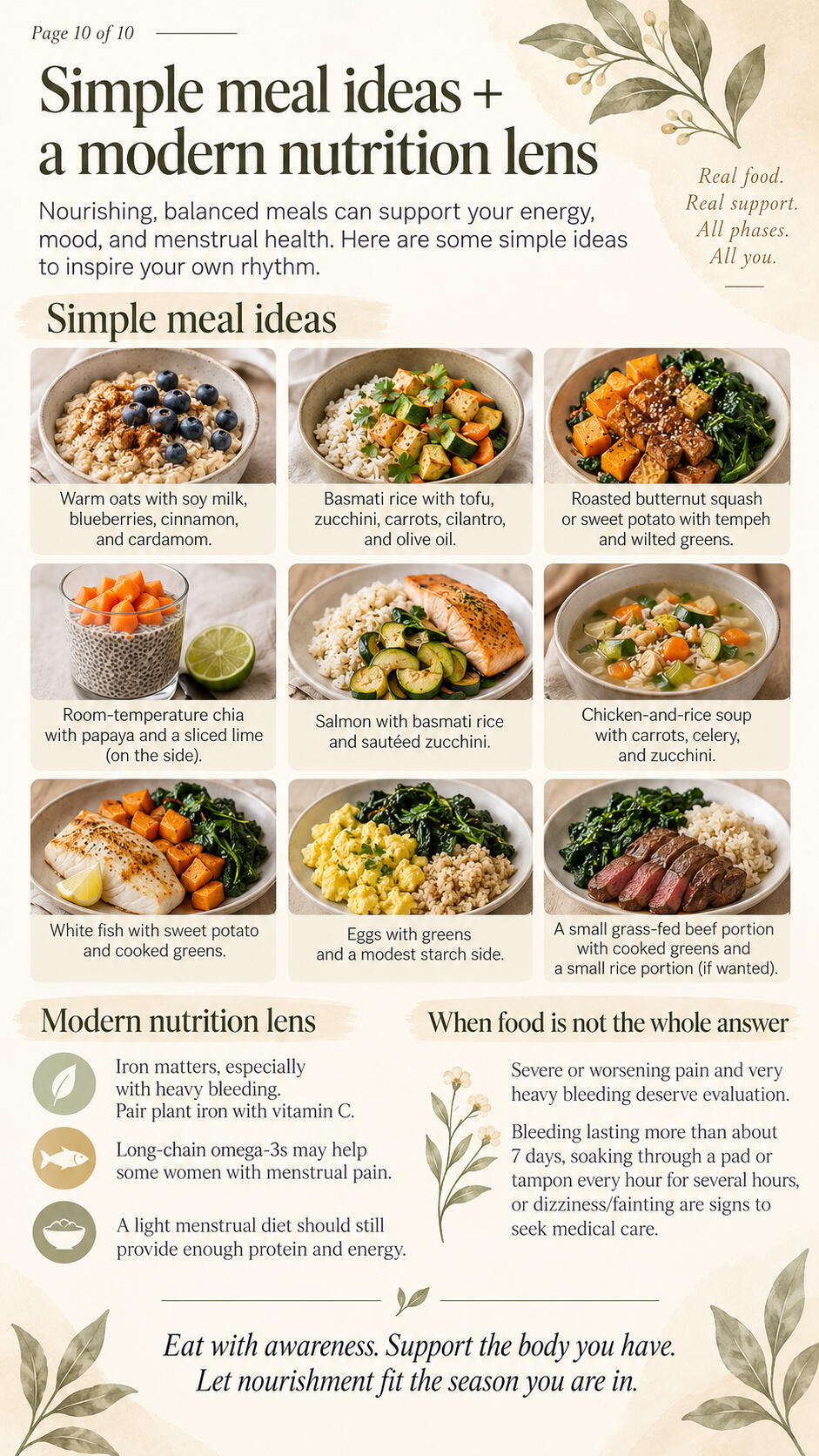
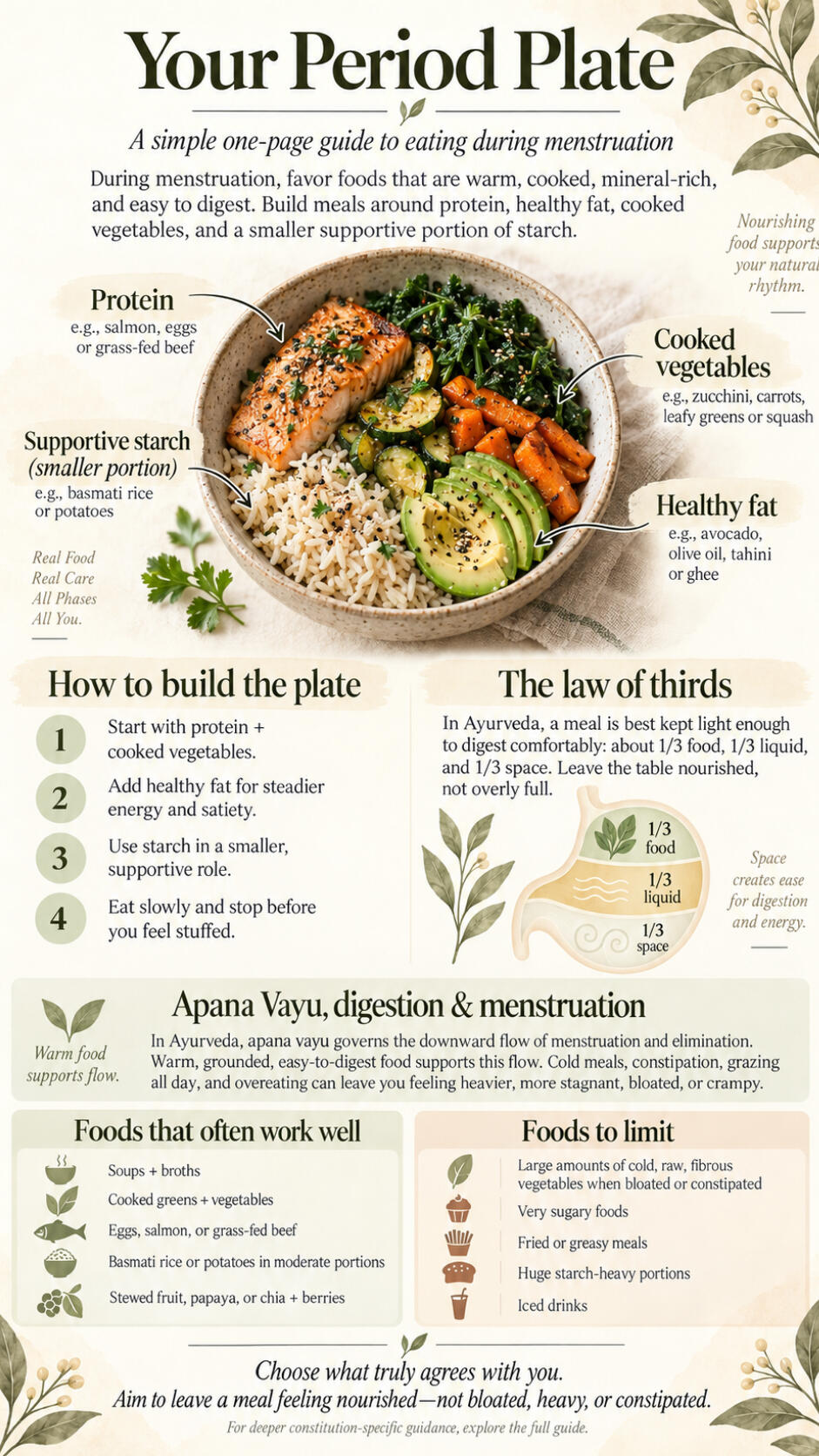
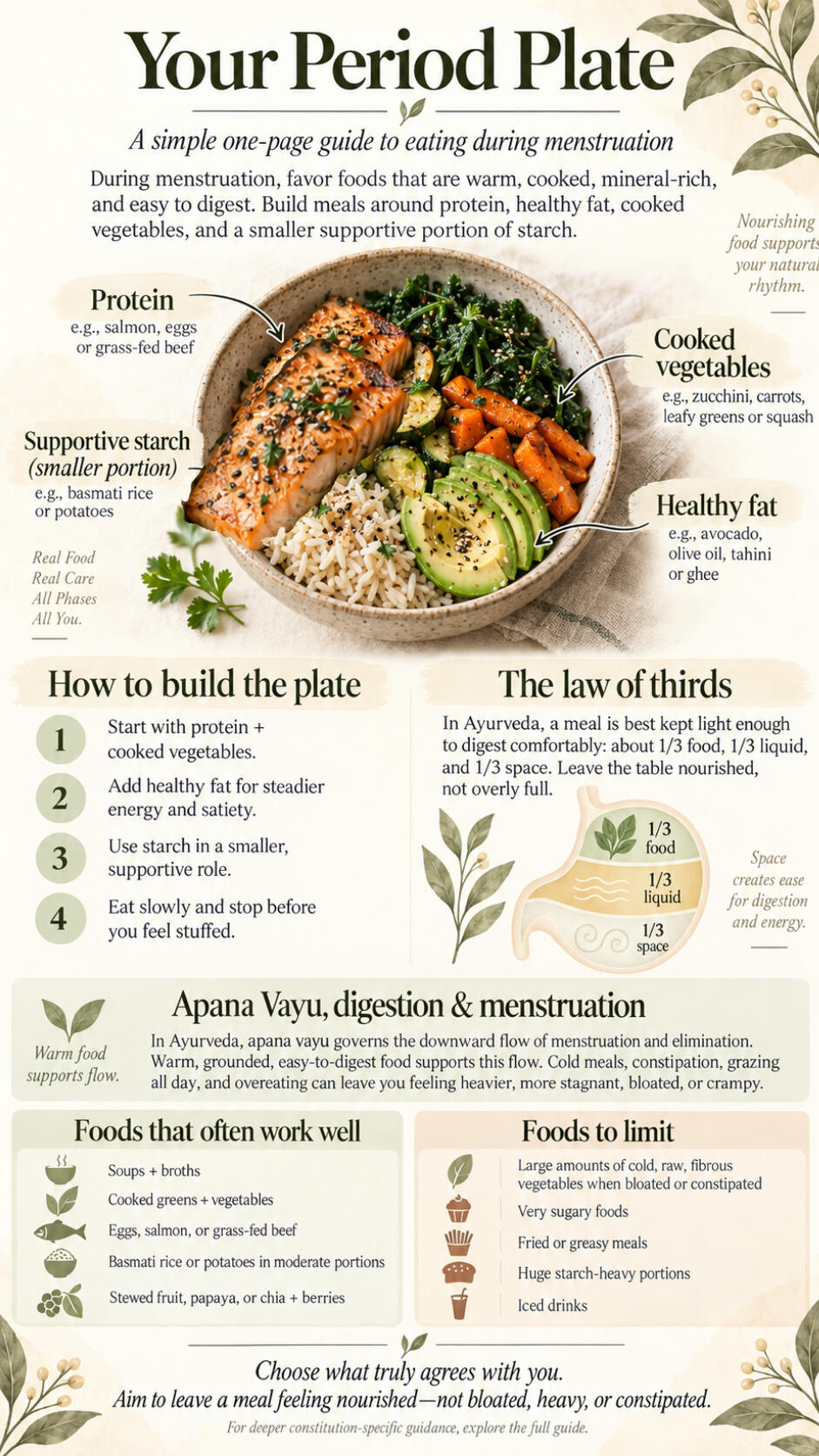
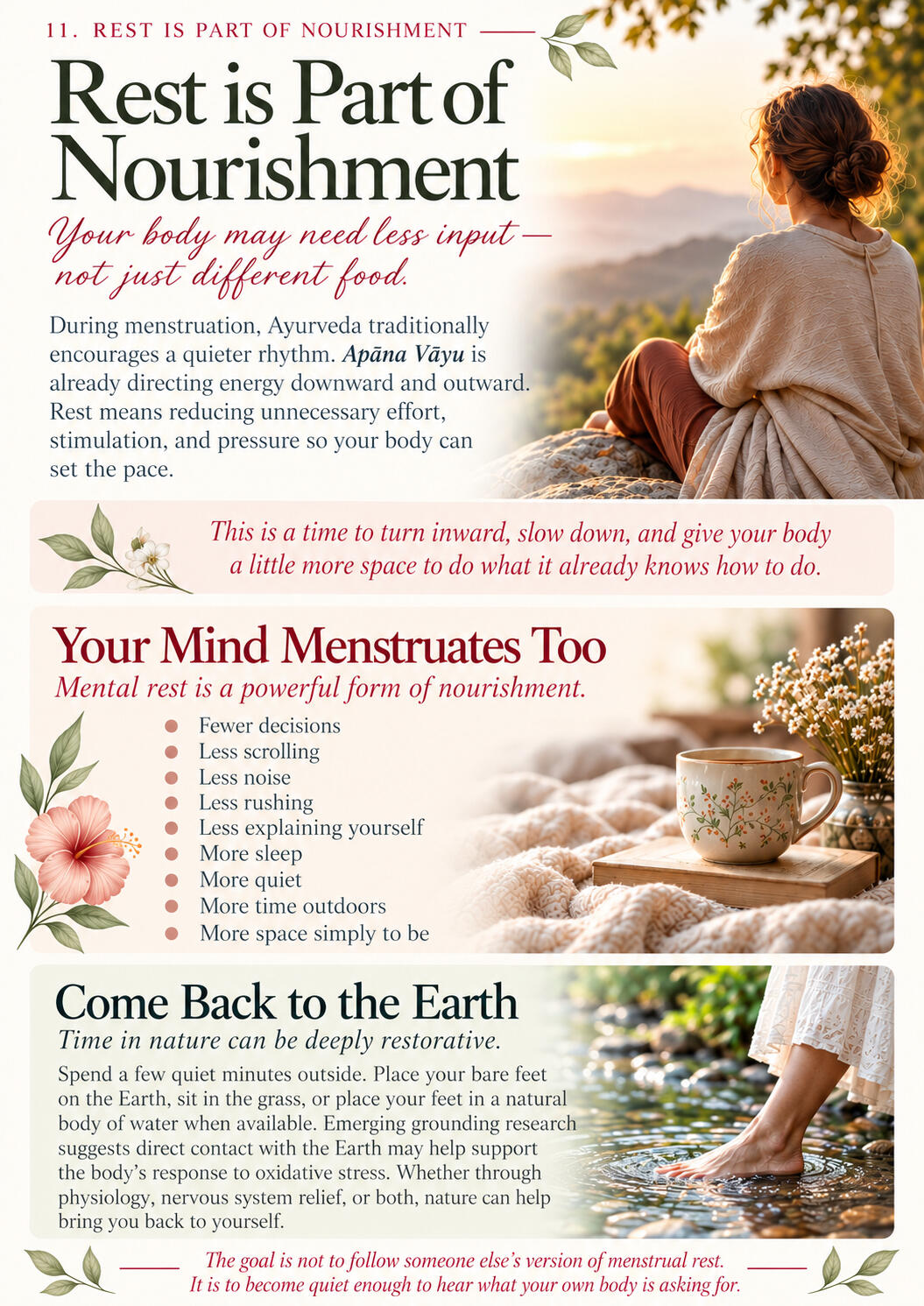
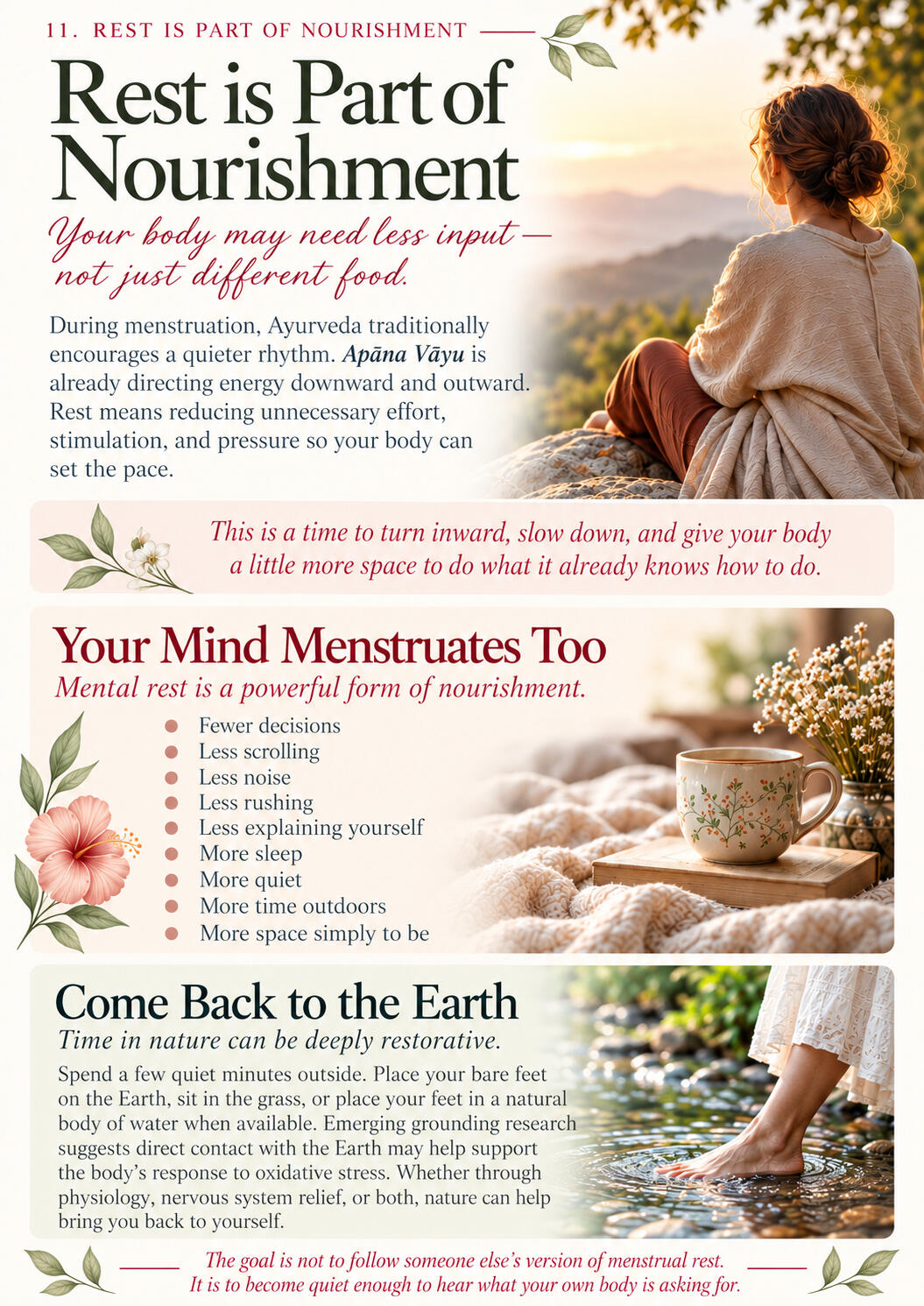
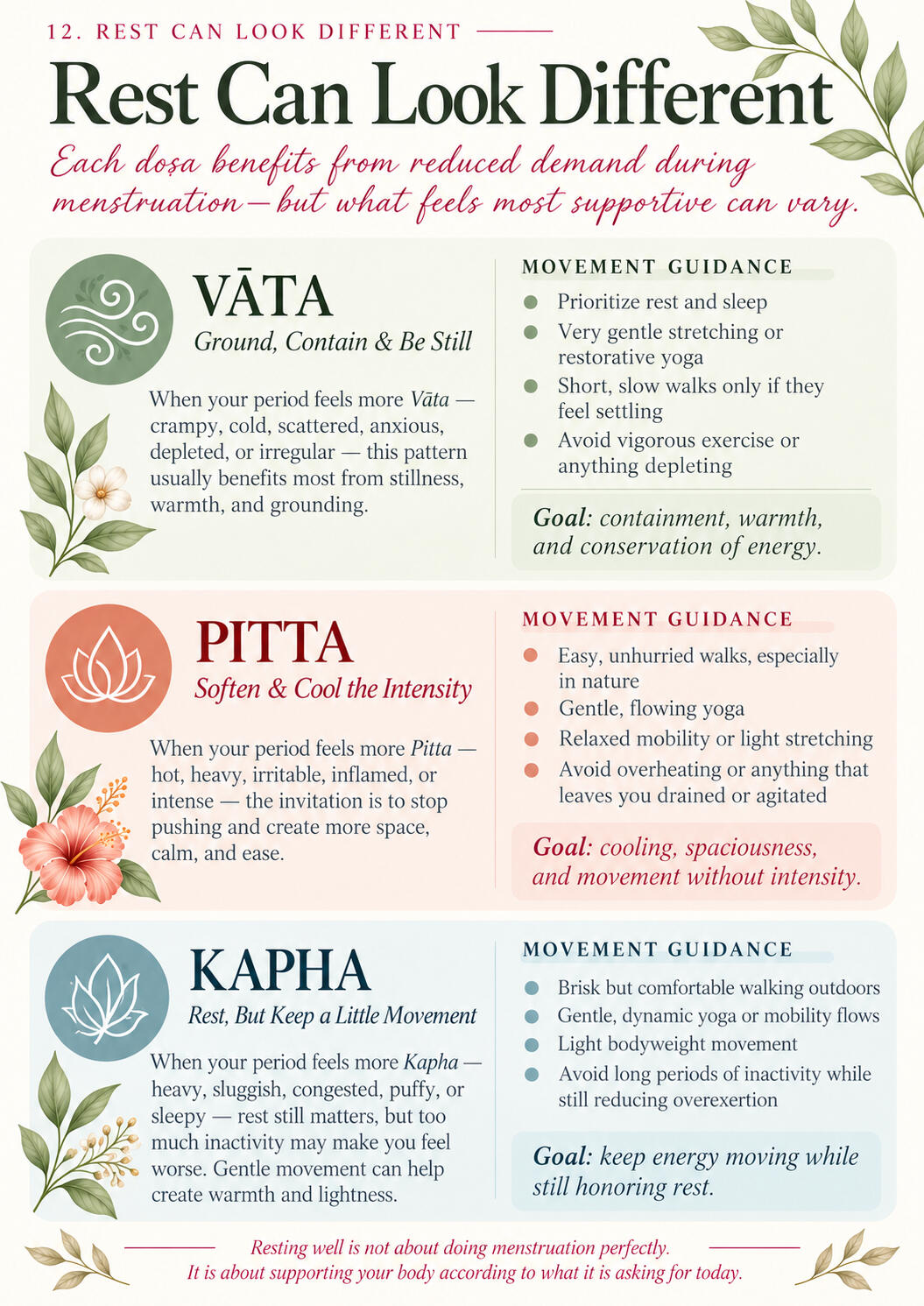
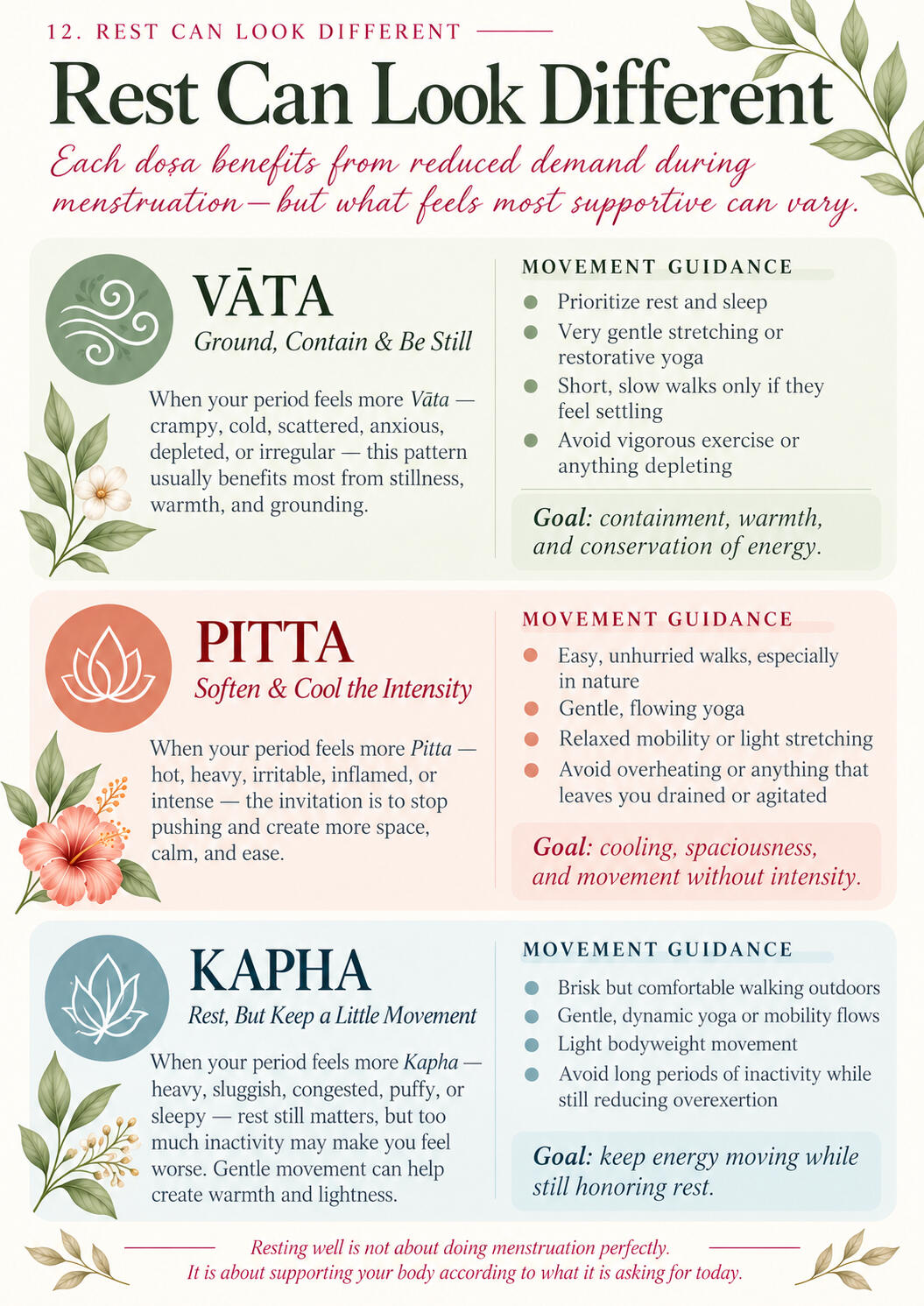
Your period Plate


The Circadian Hormone Blueprint
How Your Light Environment Influences Your
Fertility, Progesterone, and Labor
We live in a culture obsessed with hormonal fixes. If you have irregular periods, missing ovulation, intense PMS, or struggles with fertility, you have likely been told to change your diet, buy expensive supplements, or cut out stress. But there is a massive, foundational pillar of endocrine health that almost every woman is completely missing: the light hitting your eyes.Your body does not know what a smartphone, a laptop, or a modern LED lightbulb is. It only understands two biological signals: light and dark. When we disrupt those signals, we disrupt our master hormonal blueprint. Here is the revolutionary science of how your circadian rhythm dictates your reproductive health—and how you can fix it for free tonight.

The Master Clock
The Brain-Ovary Connection
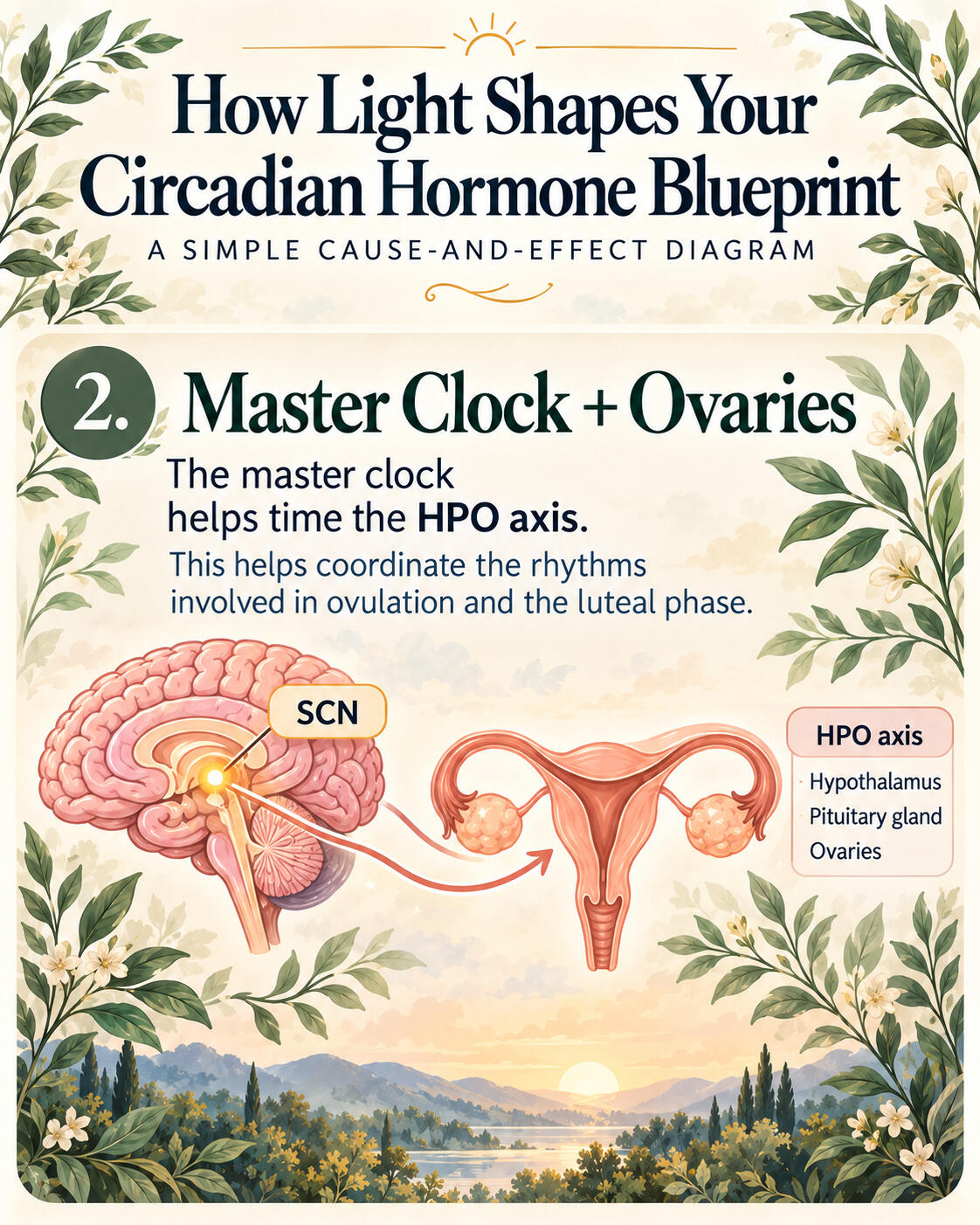
To understand your hormones, you have to look past your ovaries and look directly between your eyes. The master clock in your brain is called the suprachiasmatic nucleus, or SCN—a tiny region in the hypothalamus that receives light signals from your eyes and uses them to help coordinate your body’s 24-hour rhythms, also known as your circadian rhythm. This includes sleep, melatonin release, metabolism, and hormone timing.1. The suprachiasmatic nucleus (SCN) is the clock’s control center.
2. Your circadian rhythm is the daily rhythm the SCN helps create and coordinate.
And that timing reaches all the way to your reproductive system.
Your circadian rhythm helps coordinate the hypothalamic-pituitary-ovarian (HPO) axis—the communication network between your brain and ovaries that helps regulate follicle development, ovulation, estrogen, and progesterone.
When your master clock is consistently calibrated by natural light, those hormonal signals have a more predictable rhythm to follow. But when your light environment becomes chaotic—bright nights, dim mornings, irregular sleep—the timing signals reaching your reproductive system can become disrupted, contributing to a cascade of hormonal changes.

Evening Blue Light
Too much light at night can throw off the hormonal timing your body relies on for ovulation.
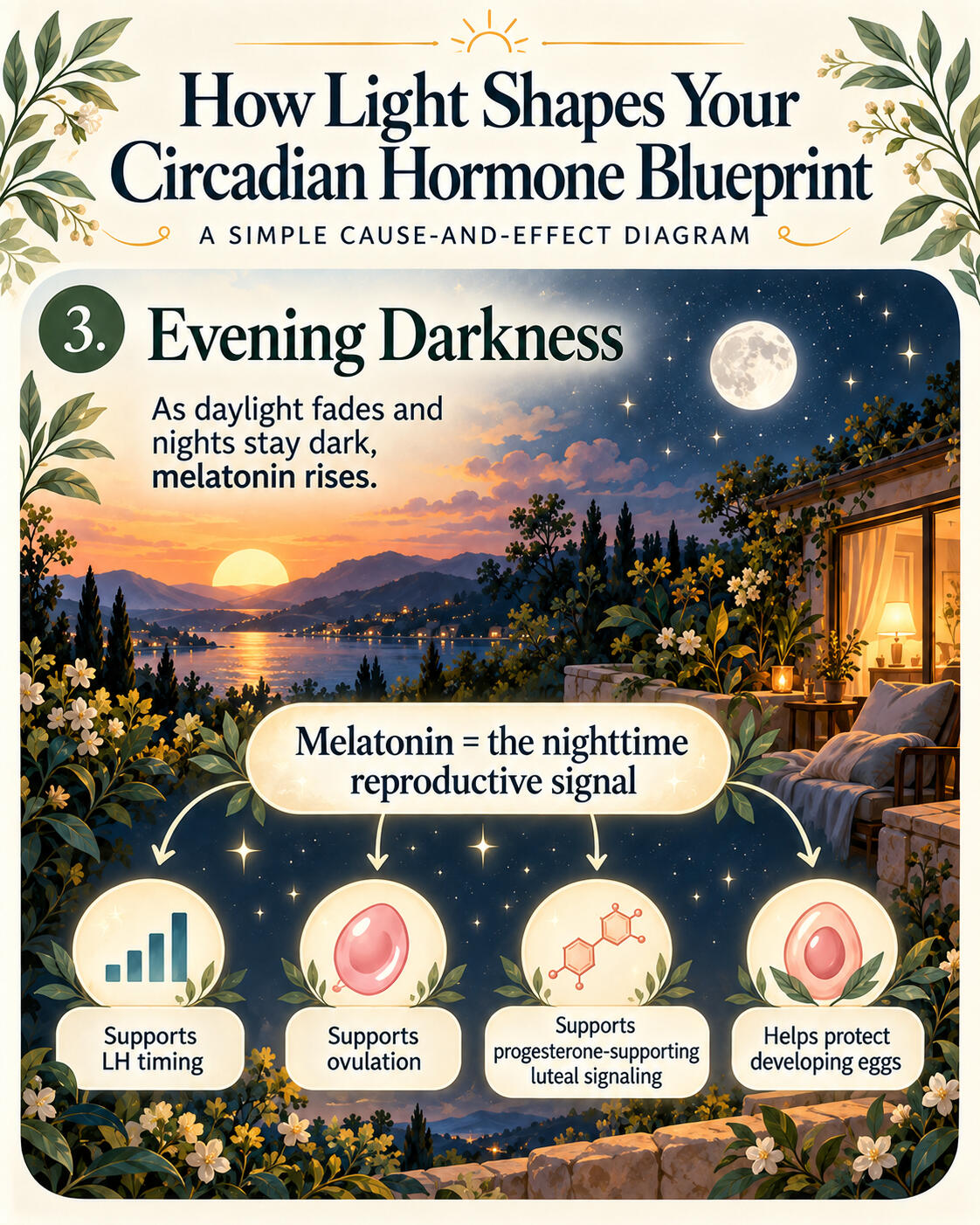
For a woman to have a healthy menstrual cycle, she must ovulate. Ovulation is not just about getting pregnant; it is the only way your body produces progesterone—the hormone responsible for calm moods, holding a pregnancy, and preventing heavy, painful periods. To trigger ovulation, your brain must release a massive, precise mid-cycle spike of Luteinizing Hormone (LH).The master clock in your brain gates this LH surge using nighttime melatonin signals. Under natural conditions, as the sun goes down, your brain floods your system with melatonin. This nighttime signal tells your ovaries that it is safe to proceed with the LH surge.
The Smartphone Sabotage
When you look at a blue-light screen (like your phone or television) after sunset, that short-wavelength light penetrates your retina and tells your SCN that it is high noon. This bright, blue-rich light hitting your eyes at night, can sharply suppress melatonin production. Without that melatonin signal, the master clock's communication with your ovaries is muted. The critical LH surge can be delayed or blocked entirely. The result?
• Anovulatory cycles (cycles where you bleed but never actually drop an egg).
• Delayed ovulation, which leads to long, unpredictable cycles.
• Compromised egg quality, because melatonin is a critical antioxidant that protects developing eggs from oxidative stress within the follicular fluid.
The Midnight Labor Connection
Why Blue Light Stalls Delivery
The connection between light and female biology becomes even more profound during pregnancy. Evolutionarily, human labor predominantly begins or progresses during the late-night and early-morning hours. This is not a coincidence; it is a strict circadian design.Late in pregnancy, a woman's uterus expresses an exceptionally high density of melatonin receptors. Melatonin works synergistically with oxytocin—the hormone responsible for labor contractions. Melatonin acts like an amplifier, latching onto uterine receptors and allowing oxytocin to effectively drive and sustain natural labor.
Birthing Room Blunder
If a laboring mother is exposed to bright artificial light—such as harsh hospital fluorescent bulbs, or scrolling through her phone in the dark to distract herself during early labor—her melatonin production can be considerably reduced. Without melatonin to amplify oxytocin, uterine contractions can suddenly slow down, weaken, or stall completely. This lengthens the labor process and dramatically increases the likelihood of medical interventions. The link is so reliable that medical researchers have even designed blue-light emitting goggles to deliberately stop contractions in women experiencing preterm labor.
The Blueprint Protocols
3 Steps to Reset Your Light Environment
Fixing your hormonal light environment does not cost a dime. It simply requires matching your lifestyle to the biology of the sun.
1. The Morning Anchor
The Reset
Within 30 to 60 minutes of waking up, step outside and get 10 to 20 minutes of sunlight in your eyes—no sunglasses if conditions are comfortable. You don't need to stare at the sun; being outside and looking toward the bright morning sky gives your brain a powerful daytime signal.The first minutes of sun rise is the best time of day for this practice if your schedule allows. This bright morning light stops all residual nighttime melatonin, anchors your master clock, and sets roughly a 14-16 hour countdown timer for your brain to naturally produce progesterone-supporting melatonin later that evening (during the luteal phase of the menstrual cycle).
2. The Evening Dim-Down
The protection
As soon as the sun sets, treat your eyes like the sensitive biological instruments they are. Turn off harsh overhead ambient lighting and switch to low-level, warm lamps (using amber or red bulbs if possible). If you must use a smartphone or computer, download blue-blocking software, turn your screen entirely red in your accessibility settings, or wear high-quality amber-tinted blue-blocking glasses.
3. True Blackout Darkness
The Healing
When it is time for bed, your room should be a cave. Use blackout curtains to block streetlights, and cover or unplug any electronic devices with small standby LED lights (blue, green, or white lights are the most disruptive). True darkness ensures your body maximizes its melatonin production overnight, protecting your fertility, your sleep quality, and your baseline hormonal health.

Your endocrine system does not function in a vacuum. It responds entirely to the cues you give it. By fixing your light environment, you hand your brain the exact blueprint it needs to restore your natural rhythm, safeguard your fertility, and bring your body back into perfect, sovereign balance.
14 Of The Most Impactful Mundane
Habits for Cyclical Living
Simple habits that support your physical + emotional well-being by working with the natural rhythms of your body and day
Morning light. Movement. Meal timing. Rest. Earlier sleep. Family time. Simple habits that support your physical + emotional well-being by working with the natural rhythms of your body and day. I break down what to do + the science behind why it matters using modern physiology and Ayurvedic wisdom. Nothing complicated. Just the basics that make an impact.
1. Start the day with water.
Before the coffee, food and rushing to start the day. Drink water. After several hours without fluids, water supports circulation, digestion, temperature regulation and kidney function.
You do not need a detox drink. Your liver and kidneys already handle detoxification .Water is not just for hydration:a. Digestive Reset: Drinking water on an empty stomach wakes up the gastrointestinal tract and promotes peristalsis (rhythmic gut contractions).b. Toxin Removal: It helps the kidneys and liver clear out metabolic waste that accumulated overnight
.

2. Get outside in the morning.
Morning light signals the suprachiasmatic nucleus (SCN), the brain’s master circadian clock located within the hypothalamus.
This helps synchronize sleep, wakefulness, hormone timing and other 24-hour rhythms. Morning light also suppresses melatonin, helping establish a clear distinction between day and night.Early morning sun contains high amounts of near-infrfared light which behaves very differently from midday UV rays. These near-infrared rays can penetrate deep into your tissues and stimulate cytochrome C oxidase (CCO) a copper containing enzyme. In short, when this this enzyme collects light photons your body gets a massive boost of cellular energy (ATP)For more on light and our hormonal health read:The Circadian Hormone Blueprint, How Your Light Environment Influences Your
Fertility, Progesterone, and Labor.
3. Rise early enough to have a morning.
Colon activity is low overnight and increases around waking and after meals, making morning a natural time for movement and elimination.Ayurveda considers early morning Vata time 2-6AM/PM —light, mobile and suited for waking, elimination and movement.
You do not need to wake extremely early. With the sun, or within about an hour of sunrise, is a practical goal when your schedule allows.Give your body time to wake before your responsibilities begin.

4. Use morning Kapha time for movement and strength.
Ayurveda describes roughly 6–10 AM/PM as Kapha time—stable, strong and grounded, but also prone to heaviness when we remain inactive. Our physiology naturally prepares the body for activity shortly after waking with a rise in cortisol thus a rise in blood glucose levels and a decrease in insulin sensitivity. The purpose of this is to ensure the brain and vital organs have ample access to energy. This is why morning is the best time of the day to exercise, and knockout activities that require deep mental focus.Walk. Carry. Bend. Squat. Stretch. Take the stairs. Lift weights. Use your body.Daily movement keeps the body active, while strength training protects muscle. Skeletal muscle is a major site of glucose disposal, helping the body use glucose efficiently and supporting insulin sensitivity. Because muscle naturally declines with age, maintaining it becomes increasingly important for metabolic health.Aim for regular daily movement and strength training at least twice per week. You do not need the entire morning to complete a workout. 20-30 minutes of intentional movement is perfect.Use the rest of the morning to tackle heavy cognitive tasks and critical thinking.
5. Eat a real breakfast.
Build breakfast around:
Protein + healthy fat + fiber-rich whole-food carbohydratesProtein and fat support fullness and satiety, while a balanced meal generally produces a steadier blood-sugar response than starting the day primarily with refined carbohydrates. You do not have to eat first thing in the morning just make your first meal of the day of real sustenance.Eat food that nourishes you.
6. Make midday your main meal.
Glucose tolerance and insulin sensitivity are generally better earlier in the biological day and poorer later in the evening. This is especially true after sunset which promotes the natural rise in melatonin and a decrease in insulin sensitivity.Ayurveda similarly teaches that agni—digestive fire—is strongest around midday and traditionally recommends making lunch the largest meal.Eat enough during the day while the sun is at its peak and avoid routinely making a late dinner your biggest meal.
7. Eat mostly whole and minimally processed foods.
Base most meals around recognizable foods:
Fruit, vegetables, nuts, seeds, whole grains, legumes if tolerated, eggs, fish, dairy or minimally processed animal foods if eaten, olive oil and avocado.
High intake of ultra-processed foods is associated with poorer cardiometabolic health.Keep food simple and recognizable.

8. Take a short nap instead of more caffeine.
Humans naturally experience an afternoon dip in alertness. It is part of circadian physiology, not simply the result of eating lunch.
A short nap of about 10–20 minutes can clear out adenosine, a brain chemical that builds up while you are awake and makes you feel tired. It improves alertness and mental performance while reducing the likelihood of waking groggy.
Long or late naps however, may interfere with nighttime sleep.Sometimes tired means you simply need rest.
9. Make nighttime look like nighttime.
As evening approaches, melatonin rises, alertness falls and the body prepares for sleep.
The first part of nighttime sleep contains the greatest amount of deep, slow-wave sleep. The largest growth-hormone pulse also typically occurs shortly after sleep begins and supports tissue repair, muscle and bone health, metabolism and recovery.Ayurveda describes approximately 10 PM–2 AM as Pitta time, traditionally associated with internal metabolism and transformation. Modern physiology does not recognize a strict 10 PM detox window, but the liver, metabolism and other organs do follow circadian rhythms.
For an early-rising person, being asleep around 9–10 PM supports adequate sleep and aligns well with the biological night and morning sunrise.Bright days. Dark evenings. Earlier sleep.

10. Use the evening trifecta.
Dinner. Walk. Wash. Bed.Walk after dinner.
Then take a warm shower or bath. Warming the skin increases blood flow to the extremities and can support the normal drop in core temperature that occurs before sleep.
Then go to bed.Let the evening become quieter as the day ends.
11. Protect your relationship.
Do not let every conversation become about children, schedules, work, bills and chores.
Spend time talking, walking, eating or sitting together without managing the household.
Close supportive relationships are associated with better psychological and physical health and can help buffer stress.Connection is part of health.
12. Leave part of the day for yourself.
Ten quiet minutes. A walk. Prayer. Exercise. Reading. Music. Stretching. Sitting outside. Constant stimulation is not recovery.Give yourself some time when nothing is being asked of you.
13. Use evening Kapha time for family and connection.
Ayurveda describes roughly 6–10 PM as Kapha time—a slower, heavier and more grounding part of the day.
Instead of filling those hours with more work and stimulation, use them for dinner, family, connection and preparing for sleep.Strong social connection is associated with better physical and emotional health. Regular family meals are also associated with better diet quality and psychological well-being in children and adolescents. Put the phone down. Eat together. Look at your children when they speak.Give your family some time when they have your full attention.

14. Practice gratitude.
Gratitude means intentionally noticing what is good without pretending difficult things are not difficult. Gratitude practices have been associated with modest improvements in positive emotion, life satisfaction and mental well-being, along with reductions in anxiety and depressive symptoms.
You do not need a complicated practice.Notice something good. Be thankful for it. Repeat tomorrow.
The Basics
Water.
Daylight.
Real food.
Movement.
Strength.
Rest.
Darkness.
Sleep.
Family.
Love.
Quiet.
Gratitude.
Living according to basic rhythms of light and dark, eating and fasting, activity and rest, effort and recovery does not need to be another complicated wellness protocol. These are conditions the human body already knows how to work with.
When Stress Steals Your Appetite
10 simple ways to calm your nervous system
and prime digestion before a meal
When you’re in fight-or-flight, stress hormones can blunt appetite and slow digestion. Before forcing yourself to eat—or skipping another meal—try one of these simple pre-meal resets.
1. Physiological Sigh
2 quick inhales through the nose + 1 long slow exhale. Repeat 3–5 times before eating.

2. Chew Thoroughly
Slow down and chew well. Digestion begins in the mouth.

3. Step Away from Screens
Turn off phones, TV, and work for 10–15 minutes before the meal.

4. Get Bright Natural Light
Morning or daytime sunlight helps regulate stress rhythms and appetite cues.

5. Bitters or Warm Lemon Water
Use a gentle bitter or sour cue before a meal to help prime digestive juices.

6. Smell the Meal
Look at and smell your food before the first bite to activate the cephalic phase of digestion.

7. Cold Splash or Ice
A brief cold splash to the face or ice to the chest can help you shift out of high alert.

8. Box Breath
Inhale 4, hold 4, exhale 4, hold 4. Repeat 4 rounds.
9. Massage Behind the Ears
Gently massage behind the earlobes and down the sides of the neck for 30 seconds.

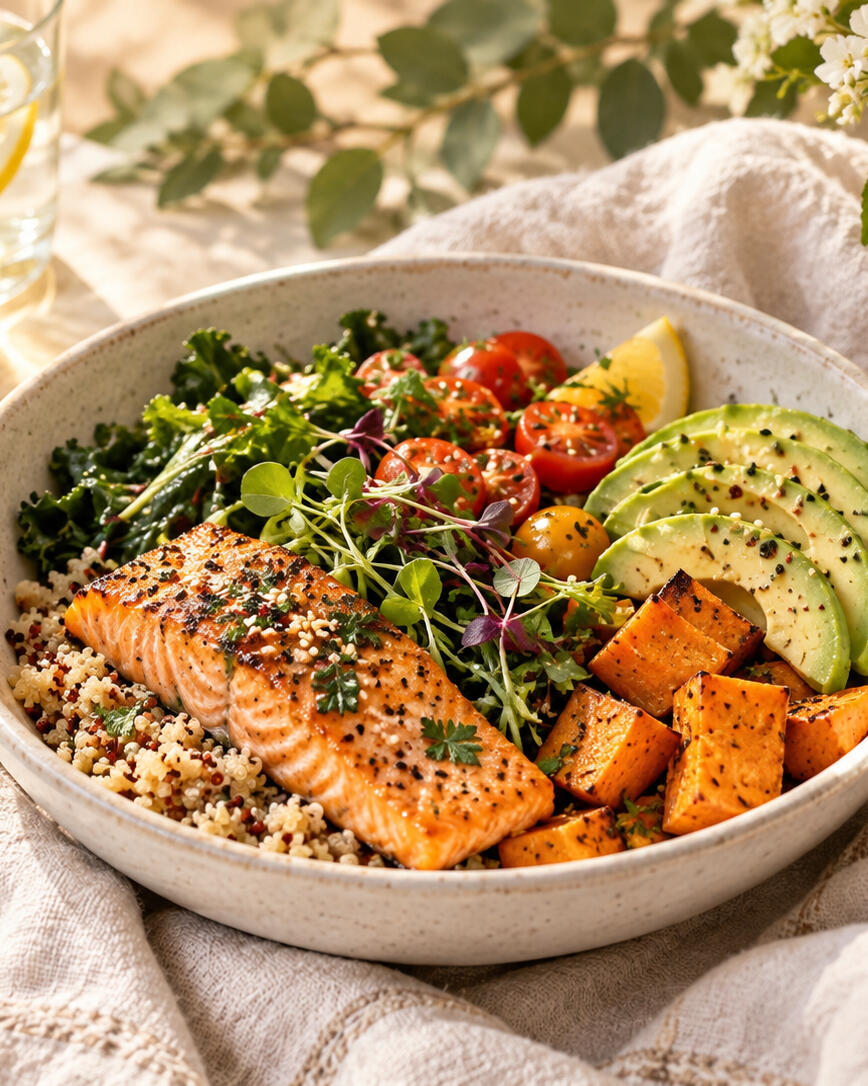
10. Visualize the Meal
Take 30 seconds to notice the food, imagine the taste, and let your body prepare to eat.
The goal isn’t to force hunger.
It’s to help your body feel safe enough to receive nourishment.
30-Minute
Strength Guide for
BUSY WOMEN
Build Muscle. Use It and Keep It.
You do not need an hour in the gym. You do not need an elaborate workout split. And you definitely do not need to perform the exact same workout every time you exercise.This guide will teach you a simple formula you can use again and again to build a balanced, full-body strength workout in about 30 minutes—whether you have no equipment, a few weights at home, or access to a full gym.You'll also learn how to adjust your workout based on your energy, recovery, menstrual cycle and current season of life. Because your body isn't exactly the same every day. Your workout doesn't have to be either.

Why Strength Matters More Than You May Realize
Most women have heard that strength training is important. But muscle does far more than move your body or change the way it looks. Researchers now recognize skeletal muscle as an endocrine organ. When your muscles contract, they release signaling molecules called myokines. These molecules participate in communication between muscle and other tissues throughout the body, including the brain, liver, pancreas, fat and bone.[1]Your muscles also play an enormous role in the way your body handles blood sugar. After you eat, skeletal muscle is one of the primary places glucose from your bloodstream can go. Muscle contraction itself also increases the movement of glucose into muscle cells.In simple terms: Your muscles give your body somewhere to put and use that fuel. That is one reason maintaining and using muscle matters for metabolic health. This becomes especially important as women approach menopause. Large longitudinal research following women through the menopause transition found that the rate of fat gain accelerated while lean mass began declining—even though the rate of overall weight gain did not suddenly accelerate.[2]
Strength training allows you to not only feel confident in your body but it also allows you to build a body capable of carrying you through the rest of your life.
The 30-Minute Intentional Framework
Every single minute of this 30-minute block is purposeful. To protect your bone density, fire up your metabolism, and maintain your muscle mass during this stage of life, you cannot just go through the motions. You need to focus, select weights that actually challenge you, and bring real intention to every single repetition.Your workout contains two circuts. Each circut contains 4 exercises. Complete approximately 3 rounds for circuit 1 and then move to circuit 2. Choose from the exercise bank. That's your workout.
• 4 Minutes — Intentional, dynamic warm-up to prep your joints and nervous system.
• 20-30 Minutes — Focused strength training. This is your main event. Make every set count.
• 3-5 Minutes — High-value core or loaded movement finisher.
• 3 Minutes — Grounding cool-down to immediately bring your nervous system back to calm.Aim for 3-4 high-quality strength sessions per week. Consistency and effort are what drive results. On the days between, support your recovery with restorative movement like walking, hiking, cycling, or deep stretching.
The 30-Minute Formula
Squat VariationUpper-Body PUSHCore ExercisePower exercise
Hinge VariationUpper-Body PULLOblique ExerciseConditioning
Squat VariationUpper-Body PUSHCore ExercisePower exercise
Hinge VariationUpper-Body PULLOblique ExerciseConditioning exercise
Why Jumping Matters for Bone Health
Your muscles aren’t the only tissues that respond to exercise. Your bones do, too! Jumping creates impact that stimulates bone cells, encouraging your bones to adapt and strengthen.Research shows that appropriately designed jumping programs can improve bone density, particularly around the hips. Studies combining resistance training with impact exercises have even improved bone density in postmenopausal women with osteopenia or osteoporosis.Focus on controlled landings rather than speed or exhaustion.Remember: Jumping isn’t just cardio. It’s an opportunity to strengthen your bones!If you have osteoporosis, previous fractures, or balance concerns, seek professional guidance before adding impact exercises.
Exercise Bank
SQUAT + LEGS
Deep squat
Sumo squat
Reverse lunge
Bulgarian split squat
Step-up
Single-leg squat
HINGE + GLUTES
Deadlift
Romanian deadlift (RDL)
Single Leg RDL
Glute bridge
Hip thrust
Single-leg deadlift
PUSH
Push-up variations wall/floor/tricep ect.
Overhead press
Dumbbell floor/chest press
Dips
Shoulder push-up
PULL
Bent-over row
Single-arm row
Resistance-band row
Lat pulldown
Pull-up
Upright row
CORE
Dead bug
Plank
Bird dog
V-up
Leg raise
Hollow hold
OBLIQUES
Side plank
Russian twist
Wood chop
Side crunch
Suitcase march
Pallof press
POWER
Kettlebell swing
Squat jump
Box jump
Broad jump
Jump lunge
Dumbbell/kettlebell push press
CONDITIONING
Burpee
Mountain climber
Plank jack
High knees
Fast step-ups
Jump rope / simulated jump rope
OPTIONAL ACCESSORIES
Bicep curl
Tricep extension
Lateral raise
Rear delt raise
Front raise
Calf raise
OPTIONAL CARRIES
Farmer carry
Suitcase carry
Overhead carry
Front-rack carry
Plate carry
Bear hug Carry
NO EQUIPMENT?
Use body weight variations. A chair, a wall or sturdy surface. Focus on good form and controlled movement. As you get stronger increase intensity
Have gym or equipment access?
Use dumb bells, barbells, kettle bells, machines, bands. Choose heavier weights as you get stronger
How Many Repetitions?
For most strength exercises: 8–15 repetitionsFor single-sided movements: 8–15 repetitions per sideFor planks and carries: Approximately 20–60 secondsFor power and conditioning exercises such as squat jumps or plank jacks: Approximately 20–60 seconds

How Heavy Should I Lift?
To get the hormonal and metabolic benefits of strength training, lifting light weights for endless, easy repetitions will not work. Your muscles and bones require a meaningful stimulus to stay strong and adapt. For every exercise, you want to choose a resistance that demands your full concentration.• You should finish your set feeling the muscle working deeply, knowing you could NOT have performed more than t 1 to 2 more clean repetitions.
• If you finish a set and feel like you could have kept going for another 5 repetitions without stopping, the weight is too light. You are coasting, and your body isn't getting the signal it needs to rebuild.How to Step Up the Challenge:If you can easily exceed the top of your repetition range, it is time to progress. Do not stay in your comfort zone. Safely increase the demand on your muscles by:• Incrementally adding weight to challenge your baseline strength.
• Switching to a stronger resistance band to increase the tension.
• Slowing the movement down (especially on the way down) to make the muscle work harder.
• Increasing your range of motion to work the muscle through its full length.
• Upgrading to a more challenging variation of the exercise.Progress during perimenopause/menopause doesn't require burning yourself out—in fact, over-stressing your system will backfire. Progress requires honest effort, heavy lifting, and the willingness to challenge what your body can do. Make these 30 minutes count!
Cycle aware training: Listen to your body not a calendar.
There is a major misconception that you need four completely different exercise programs for each phase of your menstrual cycle.
The latest research is much more nuanced: hormones fluctuate, but there is no rigid rule stating you must stop lifting heavy or completely skip HIIT during your luteal phase. Your cycle is useful biofeedback—not a strict prescription. Instead of rewriting your routine every single week, you simply need to turn your intensity dial up or down using three daily training modes.
The 3 training modes
Before every workout, check in with yourself. How is your energy, sleep, soreness, and cycle symptoms? Then, pick your mode:
• 1. CHALLENGE: Use this when you feel energetic, strong, well-rested, and highly motivated. Select heavier weights, increase your rounds, or push your pacing. Many women naturally find these days during their follicular phase (after your period ends up until ovulation), when estrogen is rising.
• 2. MAINTAIN: Use this when you feel generally good but aren't trying to smash records. Keep your normal weights, standard reps, and comfortable rest periods. Maintenance keeps your consistency alive and gives your muscles a reason to stay strong.
• 3. RESTORE: Use this when your body is actively asking for less due to poor sleep, high stress, or difficult menstruation and PMS days. Drop your rounds, lower your weights, or switch to gentle walking and mobility. You do not lose progress by modifying; it is exactly what allows you to stay consistent over time.
Training through perimenopause and beyond
As you transition into perimenopause, your cycle length, ovulation timing, and estrogen levels become highly unpredictable. This is exactly why generic calendar rules fail.
You cannot rely on a generic app to tell you what day to train hard. Instead, track your daily baseline: your bleeding, heat tolerance, sleep, and recovery. If your body feels capable, Challenge yourself. If your system is under hormonal stress, drop into Maintain or Restore.
Strength is built by ordinary workouts repeated consistently over months and years. Learn your individual patterns, adjust your intensity, and make your movement work for your biology!
Be The First to Know
Get new resources, updates and wellness insights straight to your inbox.
I'd love to hear from you.
Questions, collaborations, or simply want to say hello?